
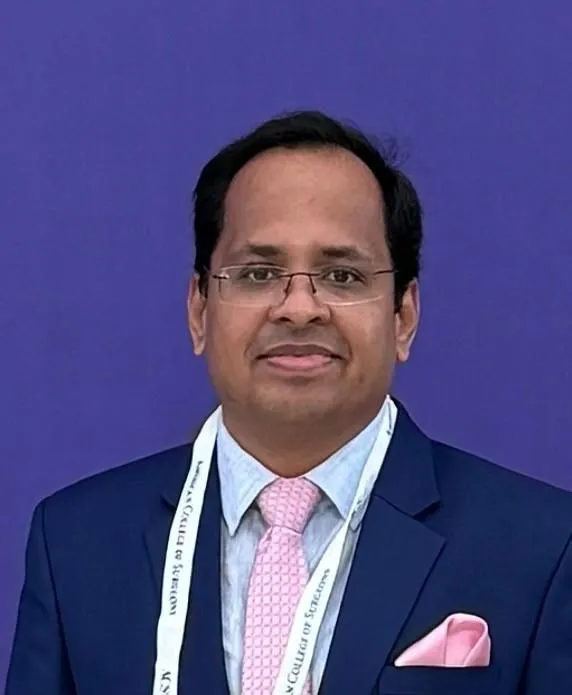
Dr. Sumit Shah | Oral Cancer Specialist in Pune
Oral Cancer Surgery in Pune
Mouth cancer surgery, reconstruction, radiation and drug treatment planned together by one team under Dr. Sumit Shah, Surgical Oncologist.
15+ Years | 2000+ Cancer Surgeries | Baner & Market Yard
What is oral cancer? Where does it start?
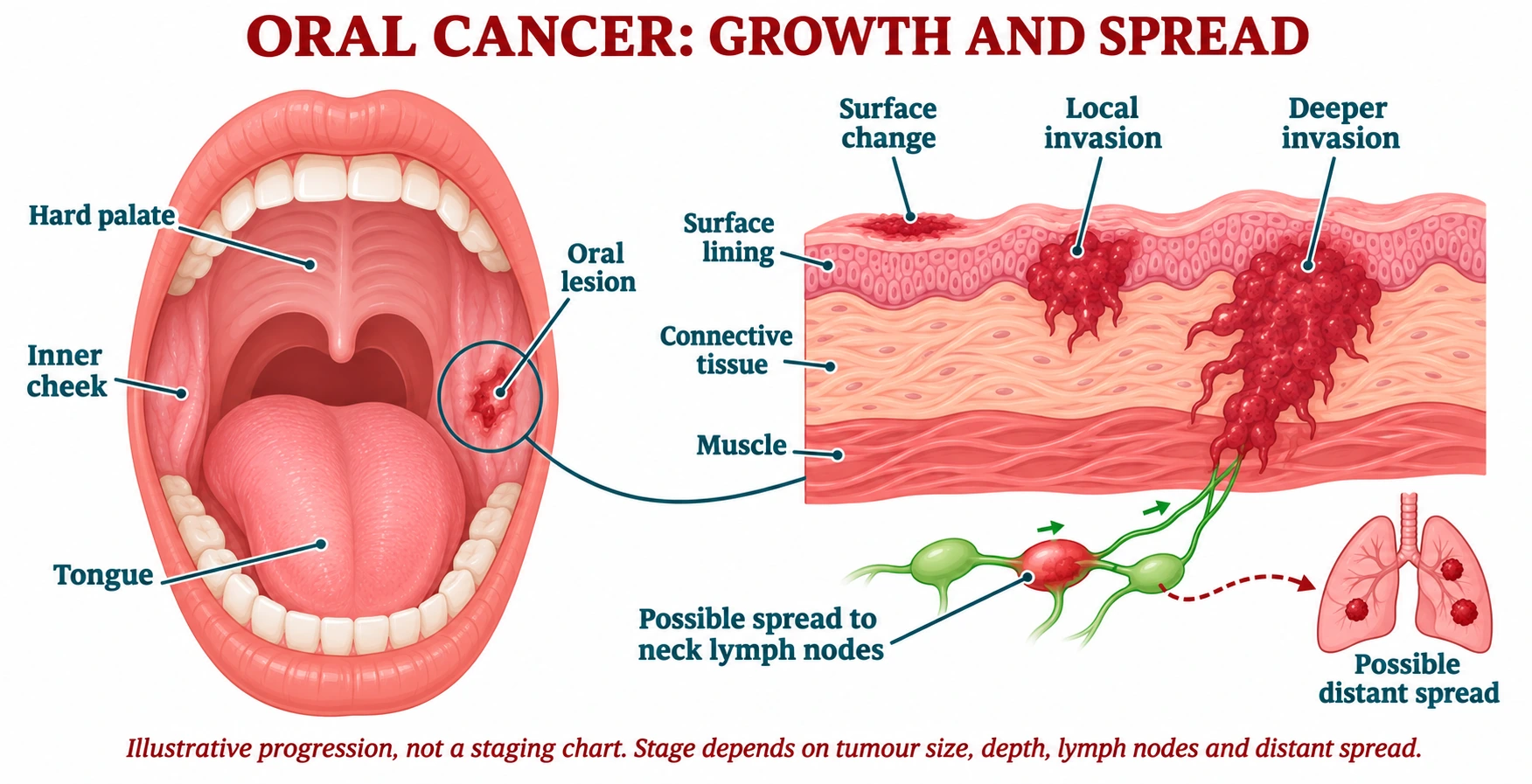
Oral cancer, also called mouth cancer, starts in the lining of the mouth. It can occur on the tongue, lips, inside the cheek, gums, and the roof and floor of the mouth. Most oral cancers begin in the thin squamous cells that line these surfaces. For comprehensive oral cancer treatment in Pune, Dr. Sumit Shah at Prolife Cancer Centre is a surgical oncologist who can provide evaluation and care.
Surgery, radiation and drug therapy are best planned together, so our surgeon, plastic surgeon, radiation oncologist and medical oncologist work as one team. The earlier oral cancer is found, the simpler treatment tends to be, so any sore, patch or lump that does not settle should be examined.
All fields are mandatory. On submit, WhatsApp opens with your details ready to send to our team.
Our mission
Eliminate fear of cancer from people’s mind and make them realize that cancer is a curable disease.
Will I be able to speak and eat after surgery?
It depends on where the cancer is and how much needs to be removed. Planning aims to protect speech, chewing and swallowing, and speech and swallowing therapy supports your recovery.
What about scars and reconstruction?
Your surgeon can explain where incisions are likely to be. When tissue or bone has to be removed, our plastic surgery team can discuss rebuilding it during the same operation.
When can I get back to my routine?
Your hospital stay and recovery depend on the operation and whether you have reconstruction. Your care team can explain when you may go home and resume daily activities.
Have you noticed any of these changes in your mouth?
See a doctor if any of these last more than two to three weeks:
- A mouth sore that does not heal
- White patch (leukoplakia) or red patch (erythroplakia), which may be pre-cancerous
- A lump, mass or thickening in the cheek, jaw, tongue or gums
- Unexpected loose teeth
- A lump in the neck
- Pain, or dentures that no longer fit, because of a sore or mass
- Difficulty chewing, swallowing, or moving the tongue or jaw
- Persistent bad breath, or unexplained weight loss
These signs do not always mean cancer, and most mouth ulcers are harmless. If you notice even one that does not settle, call to arrange an oral cancer evaluation promptly.
Call Now to Book an Oral Evaluation
What increases the risk of oral cancer?
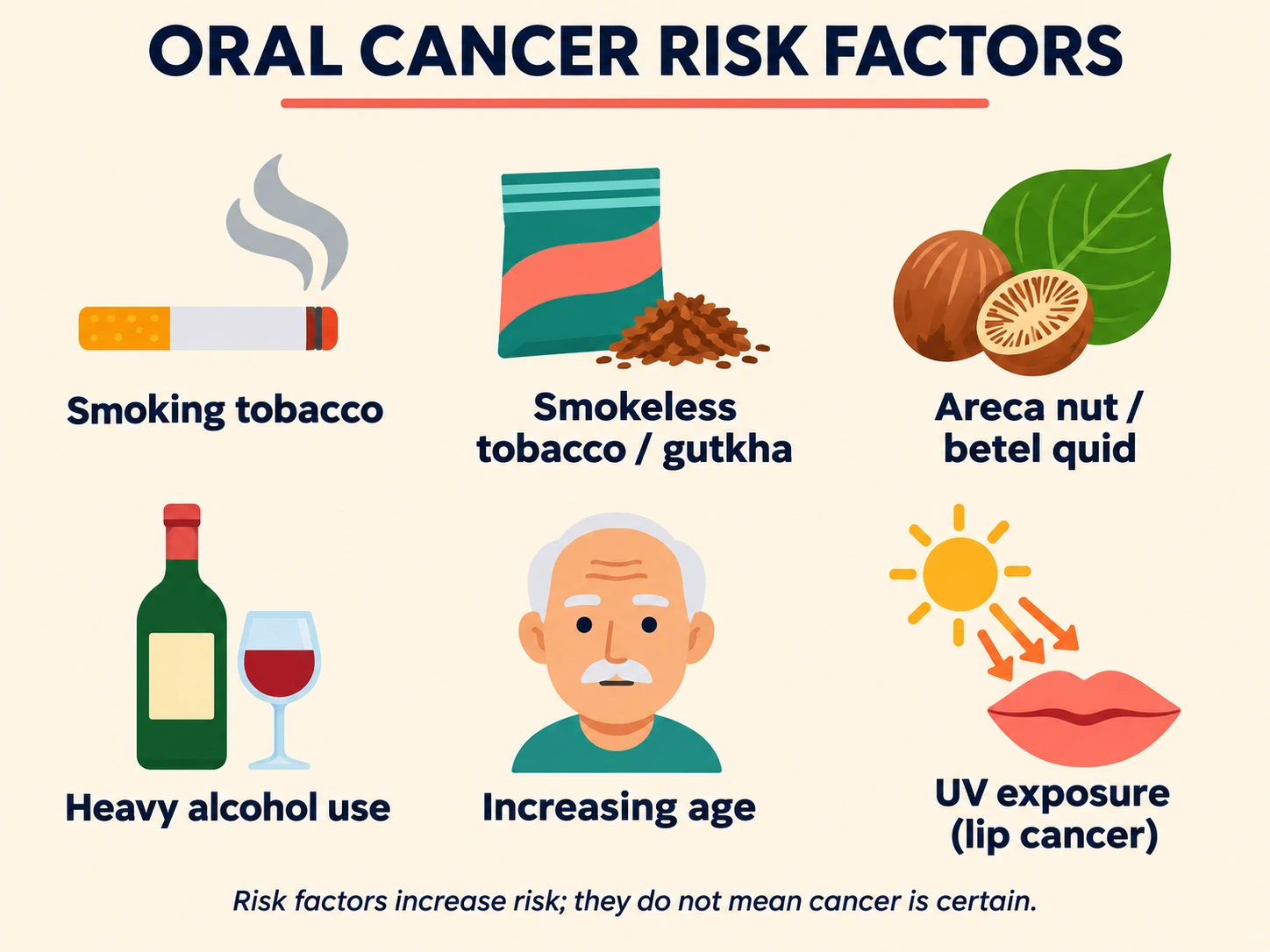
Tobacco
Chewing tobacco, gutkha and betel nut, and smoking, are the main risk factors. Longer use and larger amounts raise the risk.
Alcohol
Heavy drinking raises risk, and tobacco with alcohol is especially dangerous.
Age and gender
These cancers are found most often in people over 45, and more often in men.
Long-term irritation
Ill-fitting dentures and sharp teeth can irritate the same spot for years.
Sun exposure
Prolonged sun exposure can lead to lip cancer.
Other factors
A diet low in fruit and vegetables, weakened immunity, previous head and neck cancer, and radiation exposure.
Risk can be lowered. Stopping tobacco and betel nut is the single most effective step, and a monthly look inside your mouth in good light helps catch changes early.
1. Meet the doctor and check what’s needed
Bring any scans or reports you already have. We’ll examine your mouth and neck and explain whether you need a biopsy, CT or MRI. If you need a biopsy, we’ll explain how we numb the area and when to expect the results.
2. Plan your surgery together
We’ll talk through how the cancer can be removed, whether the neck lymph nodes need to be cleared, and whether robotic surgery suits you. If tissue or bone is removed, our plastic surgery team can discuss reconstruction during the same operation.
3. Decide if you need more treatment
Your results help us decide whether you need radiation, chemotherapy or other medicines. We’ll explain the order of treatment and where each part will take place.
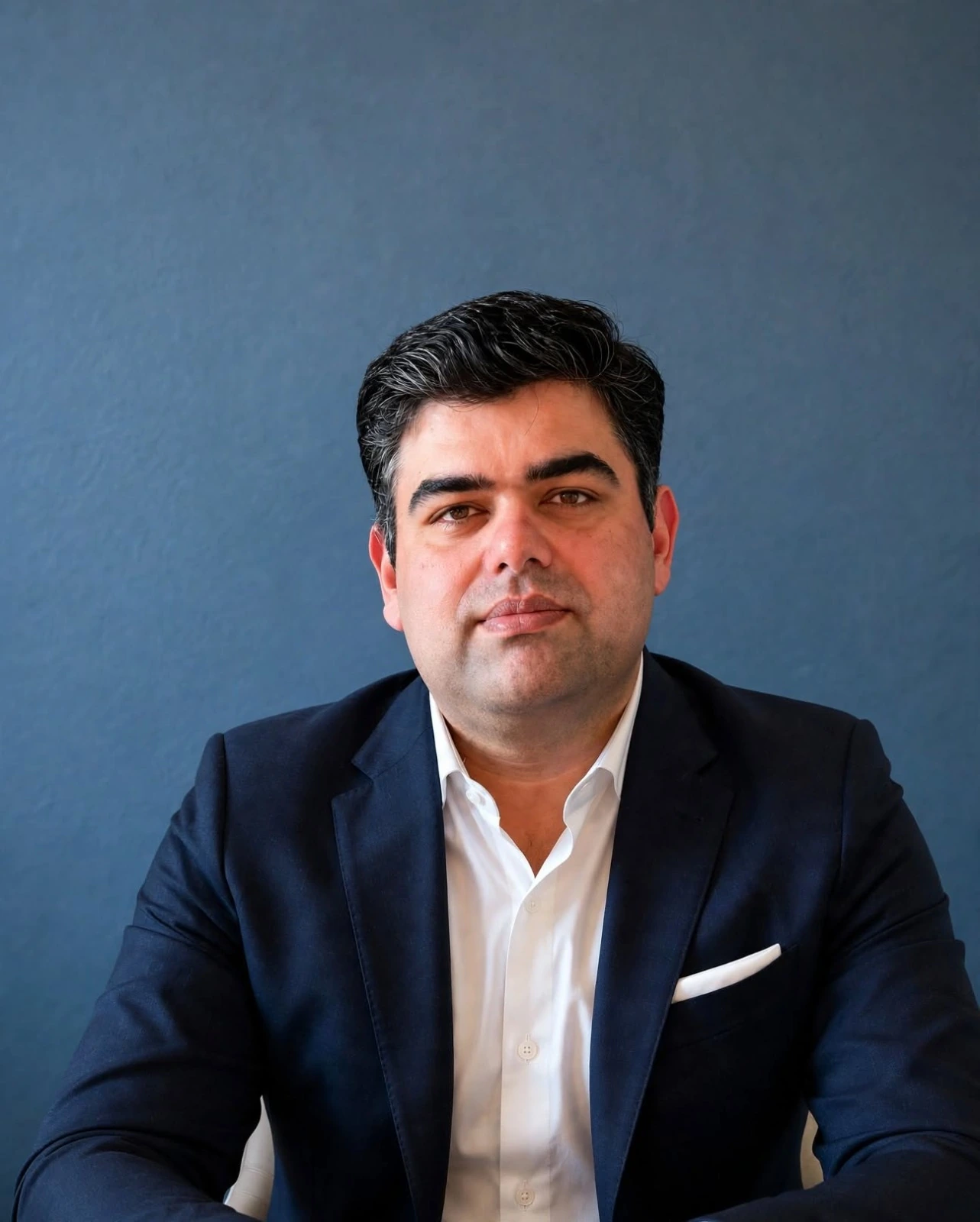
Dr. Sumit Shah
Surgical Oncologist. DNB Surgical Oncology, Fellowship in Laparoscopic and Robotic Surgery.
Dr. Pranav C. Thusay
Consultant Plastic, Reconstructive & Aesthetic Surgeon.
Surgery by Dr. Sumit Shah follows three principles: remove the cancer completely, preserve or restore function, and keep the face looking natural. Robotic surgery is offered in selected cases.
Mouth cancer surgery
The tumour is removed with a margin of healthy tissue, and margins are checked during surgery by frozen section.
Neck dissection
Lymph nodes in the neck are removed when they are involved or at risk of holding cancer cells.
Robotic mouth cancer surgery
Robotic instruments give the surgeon a magnified 3D view and precise movement in a small space. It may be used in selected cases to protect speech, swallowing and appearance.
Robotic neck dissection
In selected patients, neck nodes can be removed with robotic assistance through small, hidden incisions instead of a long neck cut.
Transoral robotic surgery
The tumour is removed through the open mouth with robotic instruments, with no cut on the face or neck. Suitability depends on the tumour’s size and position.
Rebuilding after surgery
When tissue or bone is removed, reconstruction can be planned in the same operation. See the reconstruction section below.
Your surgeon will advise which operation, open or robotic, is right for your cancer after examination and scans.
How is oral cancer diagnosed?
The doctor examines the inside of your cheeks and lips, the floor and roof of the mouth, the tongue and the lymph nodes in your neck. Further tests depend on what is found.
- Incisional biopsy: a small piece of the tumour is taken under local anaesthesia, and you can usually go home within a couple of hours.
- Fine-needle aspiration (FNA): a thin needle samples a lump felt in the neck.
- Ultrasound of the neck: checks neck lymph nodes when the mouth tumour is small.
- CT and MRI of the mouth and neck: show tumour size and depth, and whether the jawbone or neck nodes are involved. This guides surgical planning.
- Chest X-ray: checks whether the cancer has reached the lungs.
- PET-CT: only when spread to other organs is suspected.
Not every patient needs every test. Your surgeon decides what you need for your stage.
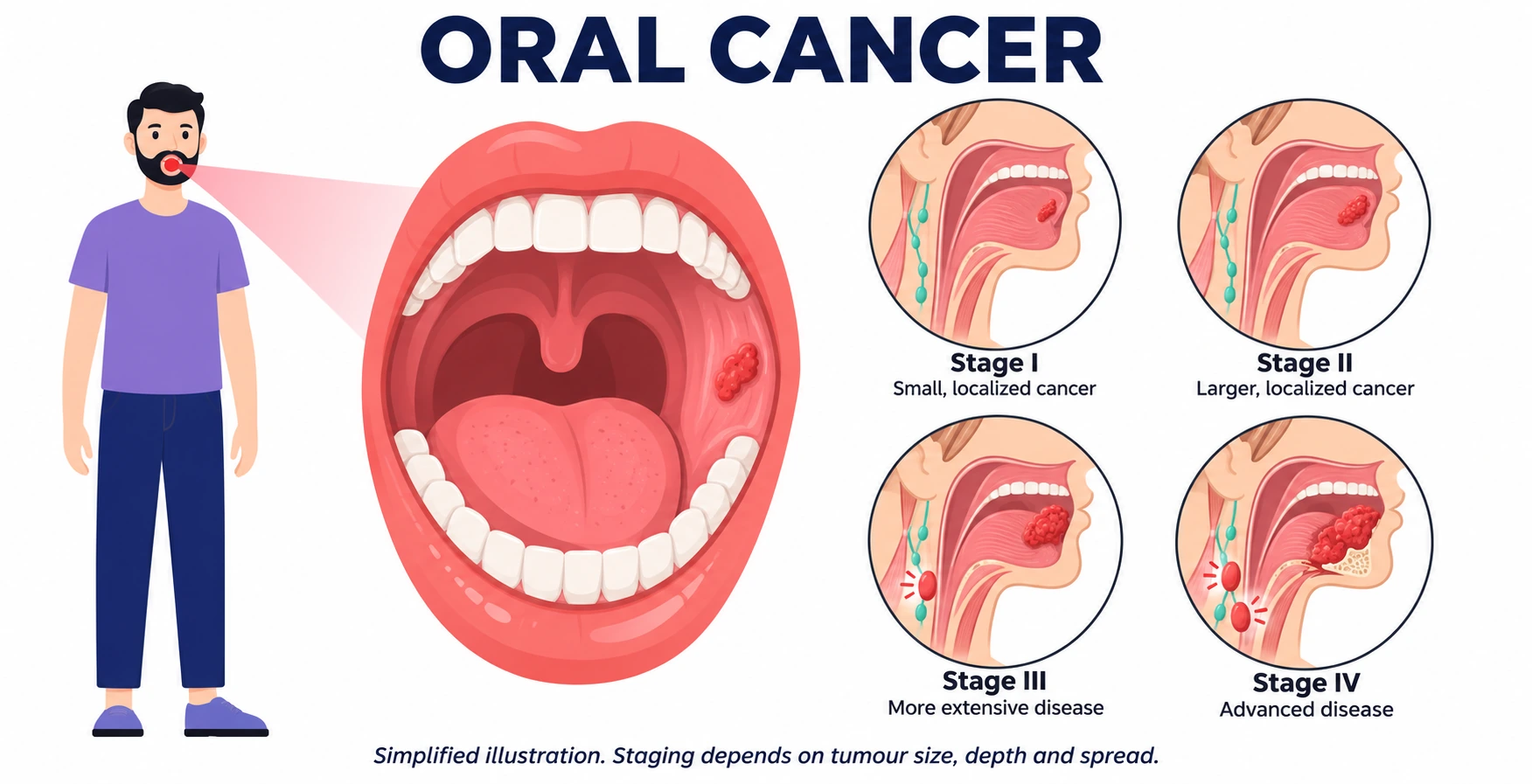
What are the stages of oral cancer?
Stage tells doctors how far the cancer has grown and whether it has spread. Doctors consider tumour size and depth, nearby tissue or bone involvement, neck lymph nodes and distant spread.
Stage 0
Abnormal cells only in the surface lining. Also called carcinoma in situ.
Stage I
A small tumour with no spread to lymph nodes or other parts of the body.
Stage II
Larger or deeper than Stage I, but not in lymph nodes or distant organs.
Stage III
Larger or deeper, or spread to a nearby lymph node, but not to distant organs.
Stage IV
Growth into nearby structures such as the jawbone, wider neck node spread, or spread to distant organs. Treatment is planned by a multidisciplinary team.
Recurrent
Cancer that returns after treatment, in the mouth, neck nodes or elsewhere.
Plastic, reconstructive and aesthetic surgeon Dr. Pranav C. Thusay plans oncoplastic reconstruction alongside cancer treatment, to help you regain speech, chewing and swallowing, and to restore appearance.
Tongue reconstruction
When part of the tongue is removed, tissue from another part of the body can be used to rebuild its shape and movement.
Making a new jawbone
When part of the jaw must be removed, a piece of bone with its blood supply, often taken from the leg, can be used to rebuild the jaw.
Making a new tongue
When most of the tongue is removed, a new tongue can be built from your own tissue to help with swallowing and speech.
Whether reconstruction is needed, and which type, depends on what is removed. Your surgical team will explain this before surgery.
Radiation for oral cancer is planned by our radiation oncology team. It may be given after surgery, or alone or with chemotherapy for more advanced tumours. Your team will explain the schedule and what to expect.
Our medical oncology team guides chemotherapy, immunotherapy and targeted therapy for oral cancer, when these are advised for your stage.
Our Insurance & TPA desk guides you through billing and claims, so you can stay focused on treatment. Cost depends on stage, the surgery needed and any added therapy. Read the full details on our Billing & Insurance page.
Documents you will need
- Cashless card, or policy paper (current and previous year)
- PAN card or Aadhaar card showing date of birth
- Doctor’s prescription and recent diagnostic reports
Empanelled with leading insurers and TPAs, including: Bajaj Allianz, HDFC ERGO, SBI General, The New India Assurance, United India Insurance, Manipal Cigna, Medi Assist, MD India, Health India.
View Billing & Insurance Details
Patient Story
Anil Munde
GI visited dr sumit shah for my mouth problem i came from ambejogai. Dr Shah guided me very nicely.View original review on Google
shahbaj kazi
GWe met Dr Sumit Shah Sir regarding my brother's mouth cancer.Before that, we had taken many opinions for mouth cancer treatment in Pune and even in Mumbai. We had even gone to Mumbai to take an opinion. We were told that surgery was not possible.[…] He also explained how it could be done and showed it to us in 3D on the CT scan. We got the reference of Shah Sir from Dr Thombre Sir from Indapur.View original review on Google
Jaykumar Susare
GI visited Prolife Cancer Centre for recurring mouth ulcers that I had been experiencing on and off for the past year. I came from Ahmednagar, Maharashtra, to consult Dr. Sumit Shah for my condition.I was having difficulty eating spicy and hot food due to the ulcers. After consulting Dr. Sumit Shah, I received a proper evaluation and was diagnosed with oral mucositis. He explained my condition clearly and guided me regarding the treatment and further care.View original review on Google
Balaji Kure
GI visted Prolife cancer centre for my Mouth cancer surgery. I came from latur to prolife cancer hospital in pune as after my search i found it as best oral cancer treatment hospital in pune.[…] At Prolife cancer centre - market yard service is really good . staff take lot of care . we are taking regular follow since last 5 years. thank you 🙏View original review on Google
Who treats oral cancer here?
Dr. Sumit Shah, a surgical oncologist, and Dr. Pranav C. Thusay, a consultant plastic, reconstructive and aesthetic surgeon, plan treatment together.
What is the first sign of oral cancer?
Often a mouth ulcer or patch that does not heal within two to three weeks. Some people notice a lump, pain or numbness first.
Is robotic mouth cancer surgery available?
Robotic mouth cancer surgery, transoral robotic surgery and robotic neck dissection are offered in selected cases. Dr. Sumit Shah will advise whether they suit your tumour and treatment plan.
How much does treatment cost?
It depends on stage, the surgery needed and any added therapy. Call the helpline for an estimate, or see the billing and insurance page.
How do I book an oral cancer consultation in Pune?
Call +91 9607079019 / +91 9607079029 or visit Prolife Cancer Centre & Research Institute at Gultekdi, Market Yard, Pune 411037. You can also use the Get Directions button above.
Prolife Cancer Centre & Research Institute, S.No. 557/A/A/15C, Hissa No. 17/1, Final Plot No. 158/1, Gultekdi, Market Yard, Pune 411037