


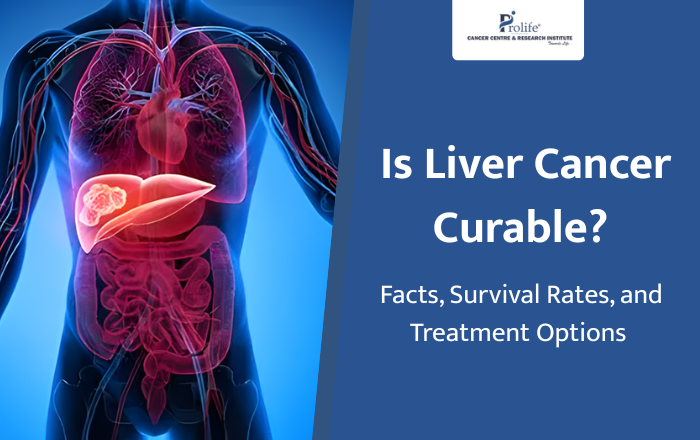
When you hear the words “liver cancer,” your first question is probably: Is liver cancer curable?
It’s a scary moment. You want honest answers, not medical jargon. You want to know what’s possible and what happens next.
Here’s the truth: liver cancer can be cured—especially when found early. Your chances depend on the cancer stage, your liver health, and how quickly you start treatment.
Let’s break down everything you need to know about liver cancer survival rates, treatment options, and what really affects your recovery.
Can Liver Cancer Be Cured? The Real Answer
Yes—is liver cancer curable? The answer is yes, but it depends on several factors:
- When the cancer is found (early stage vs. late stage)
- Type of liver cancer (primary or spread from another organ)
- Your liver’s condition (healthy or damaged by cirrhosis)
- How fast you get treatment
When doctors say cancer is “curable,” they mean:
- The cancer can be completely removed
- No cancer shows up after treatment
- You live cancer-free for 5 years or more
Early detection is your best chance for a cure.
What Affects Your Chances of Beating Liver Cancer?
1. Cancer Stage Matters Most
Early-stage (Stage I-II):
- Small tumor that hasn’t spread
- Cure rate: 50-70% with surgery
- Best treatment options available
Late-stage (Stage III-IV):
- Cancer has spread to blood vessels or other organs
- Harder to cure, but treatable
- Focus on controlling symptoms and extending life
2. Tumor Size
- Single small tumor: Best chance for cure with surgery
- Multiple or large tumors: More difficult but still treatable
3. Your Liver Health
If your liver has cirrhosis (scarring), treatment is more complex. A liver transplant can cure both the cancer and liver disease.
Liver Cancer Survival Rates: What You Should Know
Liver cancer survival rates help you understand outcomes, but remember—every person’s journey is different.
5-Year Survival Rates:
- Localized (cancer only in liver): 35%
- Regional (spread to nearby areas): 12%
- Distant (spread to other organs): 3%
(Source: American Cancer Society)
The earlier liver cancer is found, the better your chances. This is why screening matters if you’re at risk.
Treatment Options: What Works?
1. Surgery (Liver Resection)
The surgeon removes the part of the liver with cancer.
Best for: Early-stage cancer, healthy liver function
Cure potential: High for small tumors
Recovery: 6-8 weeks
2. Liver Transplant
Your diseased liver is replaced with a healthy donor liver.
Best for: Small tumors, patients with cirrhosis
Cure potential: Very high (70% 5-year survival)
Challenge: Finding a donor match
3. Ablation Therapy
Using heat or cold to destroy tumors without surgery.
Best for: Small tumors under 3 cm
Cure potential: Good for tiny tumors
4. Embolization
Blocking blood supply to the tumor so it can’t grow.
Types: TACE (with chemotherapy) or TARE (with radiation)
Best for: Medium-sized tumors that can’t be removed by surgery
5. Targeted Therapy
Drugs that attack specific cancer cells (like Sorafenib).
Best for: Cancer that has spread
Goal: Slow cancer growth and extend life
6. Immunotherapy
Helps your immune system fight cancer cells.
Example: Atezolizumab with Bevacizumab
Best for: Later-stage liver cancer
7. Radiation Therapy
High-energy beams kill cancer cells.
Best for: Tumors that can’t be removed surgically
Warning Signs: 7 Symptoms You Shouldn’t Ignore
Many people have no symptoms early on. As cancer grows, watch for:
- Unexplained weight loss (10+ pounds)
- Loss of appetite or feeling full quickly
- Pain in upper right belly
- Swollen belly (fluid buildup)
- Yellow skin and eyes (jaundice)
- Extreme tiredness
- Nausea and vomiting
If you notice these symptoms—especially with risk factors—see a doctor right away.
Who Should Get Screened for Liver Cancer?
You need regular screening if you have:
- Chronic hepatitis B or C
- Cirrhosis from any cause
- Family history of liver cancer
- Heavy alcohol use for years
- Fatty liver disease
- Diabetes and obesity
Screening includes: Ultrasound and blood test every 6 months.
Living With Liver Cancer: Simple Tips
▸Eat Well
Focus on fruits, vegetables, and lean protein. Avoid alcohol completely.
▸Stay Active
Even light walking helps your energy and mood.
▸Manage Stress
Try support groups, meditation, or talking to a counselor.
▸Follow Your Treatment Plan
Don’t miss appointments or skip medications.
▸Ask Questions
Speak up about your concerns with your doctor.
Frequently Asked Questions
Q1. Can liver cancer be cured completely?
Yes, especially in early stages with surgery or transplant. Later stages are harder to cure but can be managed.
Q2. What is the survival rate for liver cancer?
It depends on stage. Early-stage has 35% 5-year survival. Later stages have lower rates.
Q3. How long can you live with liver cancer without treatment?
Without treatment, cancer may progress within 3-6 months for later stages.
Don’t Wait: Get Expert Guidance for Liver Cancer Treatment
Is liver cancer curable? Yes—and your best chance starts with taking action now.
If you’re in Pune and looking for trusted liver cancer treatment, Prolife Cancer Centre offers complete care with a team that understands what you’re going through.
Led by Dr. Sumit Shah, a Surgical Oncologist with 22+ years of experience, the centre focuses on proven surgical methods and supportive care throughout your treatment journey.
Why Choose Dr. Sumit Shah & Prolife Cancer Centre?
✅ Over 22 years treating cancer patients
✅ Proven surgical techniques
✅ Caring support from diagnosis to recovery
✅ Focus on you and your family’s needs
📞 Book your appointment today
📍 Prolife Cancer Centre, Pune
Your journey toward healing starts with the right care. Let’s take this step together.
