


When someone hears the word “cancer,” the first feeling is often fear — followed quickly by one desperate question: “What can be done?” For a long time, the answer looked the same for most patients: surgery, chemotherapy, radiation. It worked for many, but it wasn’t perfect. It was broad. It was tough on the body. And it didn’t always work.
That’s where precision oncology steps in — and it’s changing everything.
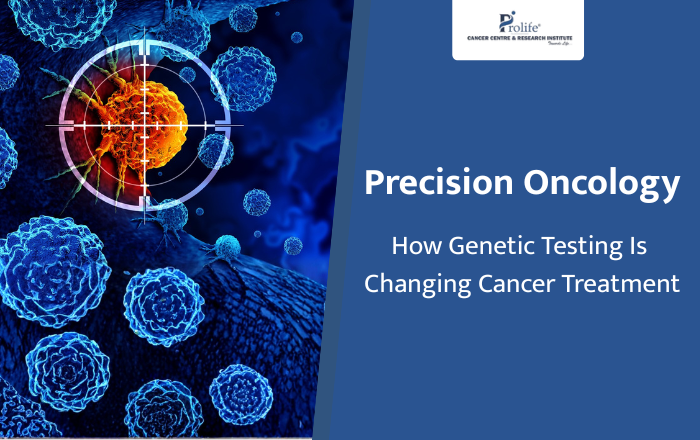
Precision oncology is a smarter way to treat cancer. Instead of giving every patient with the same cancer type the same treatment, doctors now look at the DNA inside the tumor itself. They find the exact genetic changes driving that cancer — and then target those changes directly. It’s like finding the lock and using the exact right key, rather than trying every key on the ring.
What Is Precision Oncology, Really?
At its core, precision oncology means matching cancer treatment to the specific genetic makeup of a patient’s tumor. Two people can both have lung cancer, but their tumors may have completely different genetic mutations. What works for one may do nothing for the other.
Genetic testing for cancer helps doctors understand those differences. By reading the DNA of the tumor, they can see which genes are mutated, which proteins are misbehaving, and which treatments will actually hit the target.
This isn’t experimental anymore. It’s happening in hospitals across India and around the world — right now.
How Does Genetic Testing Work in Cancer Care?
There are a few different types of genetic testing used in cancer treatment:
- Tumor Genomic Profiling — A detailed scan of hundreds of genes inside the tumor. It finds mutations that may be driving cancer growth and helps match the patient to the right treatment.
- Biomarker Testing — Looks for specific markers like HER2, EGFR, BRCA1/2, or PD-L1. These markers tell doctors whether a specific drug will work or not — saving patients from treatments that won’t help them.
- Liquid Biopsy — A simple blood test that picks up cancer DNA floating in the bloodstream. No surgery needed. It can monitor how well treatment is working and catch recurrence early.
- Germline (Hereditary) Testing — This checks the patient’s own DNA — not just the tumor — to find inherited mutations that raise cancer risk. Useful for families with a history of cancer.
Once the genetic profile of the tumor is clear, the oncologist uses that information to choose treatments that directly target the cancer’s weakness. It removes much of the guesswork.
Which Cancers Respond Best to This Approach?
Precision oncology has shown strong results across several cancer types:
- Lung Cancer — Mutations like EGFR and ALK can now be targeted with oral medications. Patients with EGFR-positive lung cancer on targeted therapy live significantly longer than those on standard chemotherapy alone.
- Breast Cancer — HER2-positive breast cancer, once very aggressive, now has 5-year survival rates above 90% in early stages thanks to targeted cancer treatment matched to the HER2 mutation.
- Colorectal Cancer — Testing for KRAS and BRAF mutations tells doctors which drugs will work — and which ones to avoid entirely.
- Melanoma — Around 50% of melanomas carry a BRAF mutation. Targeted therapies for this mutation have dramatically improved survival in a cancer once considered nearly untreatable at later stages.
- Blood Cancers — In chronic myeloid leukemia (CML), a single targeted drug — matched through genetic testing — achieves remission in over 85% of patients.
What Do the Numbers Say?
The results behind precision oncology are hard to ignore:
- 60–80% of patients with advanced cancer have at least one actionable genetic mutation that can guide treatment (Journal of Clinical Oncology, 2022)
- Patients matched to the right targeted therapy respond at rates 3 times higher than those given unmatched treatment
- Liquid biopsy can detect cancer recurrence up to 6 months earlier than standard imaging
- India sees over 1.46 million new cancer cases every year (ICMR, 2022) — making access to smarter treatment more important than ever
These numbers represent real people — people who got more time with their families, who felt better during treatment, who had reasons to hope.
Is Precision Oncology Available in India?
Yes — and access is growing. Cities like Pune, Mumbai, Delhi, and Bangalore now have cancer centres offering genomic testing and targeted cancer therapies. Costs for genomic panels range from ₹30,000 to ₹1.5 lakh depending on the type of test, and some insurance plans are beginning to cover them when medically justified.
The key is finding an oncologist who can not only order these tests but also understand the results and translate them into a treatment plan that makes sense for you.
FAQ
Q1: Is genetic testing painful?
Not at all. Most tests use tissue from a biopsy already taken during diagnosis, a blood draw for liquid biopsy, or a saliva sample for hereditary testing.
Q2: How long do results take?
Biomarker tests take about 5–10 days. Full genomic profiling can take 2–4 weeks.
Q3: Does everyone with cancer need genetic testing?
Not always. It’s most useful for advanced, treatment-resistant, or returning cancers — and for certain cancer types like lung, breast, ovarian, and colorectal. Your doctor will guide you.
Q4: What if no mutation is found?
It’s still valuable information. It rules out certain treatments and opens the door to immunotherapy options or clinical trials.
Q5: Can precision oncology cure cancer?
In some cancers — especially blood cancers — long-term remission is achievable. For many others, it extends life and improves quality of life significantly.
Seek the Right Guidance — Don’t Wait
A cancer diagnosis doesn’t have to mean confusion or helplessness. With precision oncology and genetic testing for cancer, there are more options today than ever before. But these tools only work when paired with the right medical expertise.
Get Expert Guidance at Prolife Cancer Centre, Pune
If you or someone you love is dealing with a cancer diagnosis, Prolife Cancer Centre is a trusted name in cancer care — led by Dr. Sumit Shah, a Senior Surgical Oncologist with 21+ years of experience in cancer surgery and treatment.
Dr. Shah and his team take time to understand each patient’s condition, explain their options clearly, and guide families through every step of treatment — with honesty, compassion, and skill built over two decades of dedicated cancer care.
📅 Book your consultation with Dr. Sumit Shah at Prolife Cancer Centre — one of the most trusted names for cancer treatment in Pune — and take the first step toward clarity and care. Because the right guidance at the right time can truly change outcomes.
You don’t have to figure this out alone. If you’re looking for reliable cancer treatment in Pune, real help is closer than you think — right here, when you need it most.
