


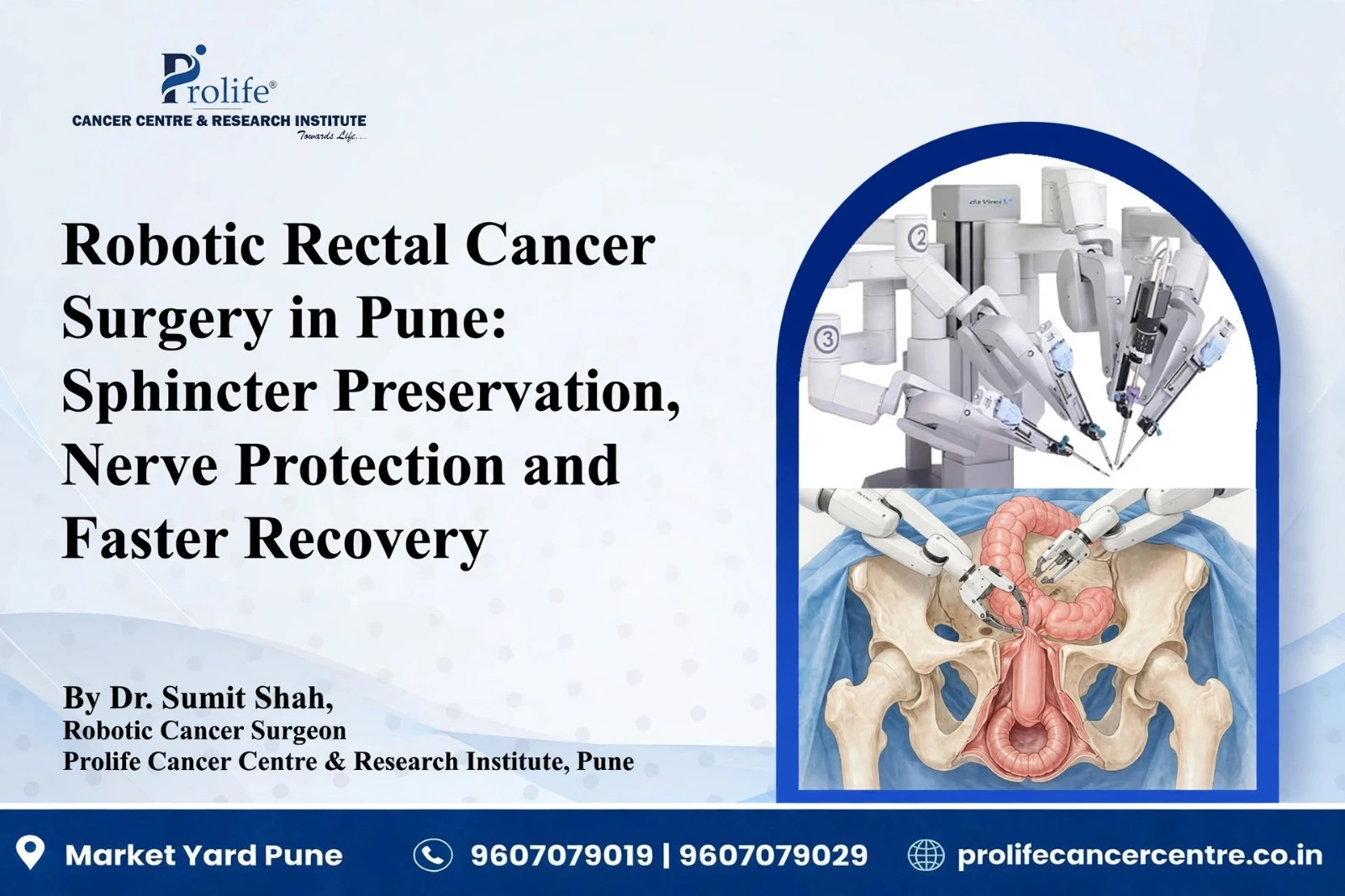
Robotic Rectal Cancer Surgery in Pune: Sphincter Preservation, Nerve Protection and Faster Recovery
By Dr Sumit Shah
Robotic Cancer Surgeon
Prolife Cancer Centre & Research Institute, Pune
“Will I need a permanent stoma bag after rectal cancer surgery?” This is one of the most important concerns patients have when discussing treatment. Patients also want to understand whether surgery will affect their bladder function, sexual health and everyday activities.
My message is reassuring: rectal cancer surgery does not automatically mean a permanent stoma bag. Many suitable patients can undergo sphincter-preserving surgery, although some need a temporary stoma while the bowel connection heals.
At Prolife Cancer Centre & Research Institute, Pune, my priority is to remove the cancer safely while preserving bowel, bladder and sexual function wherever medically possible.
What Is Robotic Rectal Cancer Surgery?
Robotic rectal cancer surgery is a minimally invasive operation performed through small abdominal incisions. The surgeon controls the robotic instruments throughout the procedure. The robot does not operate independently.
The system provides a magnified, three-dimensional view and instruments with wrist-like flexibility. These features help the surgeon work precisely within the narrow pelvis, where the rectum lies close to important nerves, blood vessels and other organs.
For patients considering robotic rectal cancer surgery in Pune, suitability depends on the tumour’s location, extent, previous treatment and overall health.
Sphincter Preservation: Avoiding a Permanent Stoma Wherever Possible
One of the most important goals of rectal cancer surgery is preserving the anal sphincter, the group of muscles that controls the passage of stool.
When the cancer can be removed safely while preserving these muscles, it may be possible to reconnect the bowel and maintain the natural route for bowel movements. Sphincter-preserving procedures can help suitable patients avoid a permanent colostomy.
Robotic surgery’s enhanced view and controlled instrument movements can support the precise dissection required for these operations. However, the robotic approach alone does not determine whether a stoma will be necessary.
My aim is to preserve the sphincter whenever complete cancer removal and useful bowel function can be achieved. Preserving it must never come at the cost of leaving cancer behind.
Protecting the Nerves Responsible for Bladder and Sexual Function
Another important goal is protecting the delicate pelvic nerves that lie close to the rectum. These nerves help regulate bladder emptying and sexual function.
The robotic system’s magnified view and flexible instruments may help the surgeon identify and carefully preserve these nerves during cancer removal. This nerve-sparing approach aims to protect urinary and sexual function and support quality of life after treatment.
However, robotic surgery cannot guarantee normal function after treatment. Outcomes also depend on the tumour’s involvement of nearby structures, previous bladder and sexual function, radiotherapy and the extent of surgery.
For me, treatment planning includes both cancer clearance and the functions that matter to a patient’s daily life.
When Is a Permanent Stoma Necessary?
A permanent stoma may be necessary when cancer involves the anal sphincter or nearby pelvic floor muscles, and these structures must be removed to clear the disease.
Sphincter involvement is not the only reason. A permanent stoma may also be needed when a safe bowel reconnection or satisfactory bowel function cannot be achieved.
As a rectal cancer surgeon in Pune, I believe these possibilities should be discussed clearly before surgery. Every patient should understand the planned procedure and the reasons a temporary or permanent stoma might be required.
Does a Temporary Stoma Mean a Lifelong Bag?
No. A temporary stoma and a permanent stoma serve different purposes.
Some patients need a temporary ileostomy even after sphincter-preserving surgery. This diverts stool away from the new bowel connection while it heals.
A reversal operation may be considered after healing and further treatment needs have been assessed. The timing varies, and reversal cannot be guaranteed in every patient.
Avoiding a permanent stoma does not always mean avoiding a temporary bag immediately after surgery. Understanding this distinction helps patients prepare for treatment with realistic expectations.
Preserving the sphincter also does not guarantee unchanged bowel habits. Some patients experience increased frequency, urgency or leakage and may need support during recovery.
Less Pain, Less Blood Loss and Earlier Return Home
For appropriately selected patients, robotic rectal cancer surgery may offer benefits compared with open surgery, including:
- Smaller incisions
- Less postoperative pain
- Reduced blood loss
- Earlier mobilisation
- A shorter hospital stay
- A quicker return to everyday activities
These benefits vary between patients, and recovery may be similar to other keyhole approaches. The time needed to return home depends on the operation, general health, bowel recovery and any complications.
My aim is to help patients recover steadily and return home safely, with clear guidance about nutrition, activity, wound care and any temporary stoma care.
Rectal Cancer Treatment in Pune with Dr Sumit Shah
If you are looking for a rectal cancer specialist in Pune, an individual assessment can help you understand the available treatment options.
Planning considers biopsy results, pelvic MRI, staging scans, general fitness and existing bowel function. Some patients require chemotherapy or radiotherapy before surgery. The treatment sequence is decided according to the cancer’s stage and the patient’s needs.
At Prolife Cancer Centre & Research Institute, Pune, my focus is safe cancer treatment, sphincter preservation wherever feasible, protection of pelvic nerves and the best achievable quality of life.
Do not assume that rectal cancer means a permanent stoma bag. Consult Dr Sumit Shah about robotic rectal cancer surgery in Pune to understand whether sphincter-preserving and nerve-sparing treatment is suitable for you.
Dr Sumit Shah
Robotic Cancer Surgeon
Prolife Cancer Centre & Research Institute, Pune
