

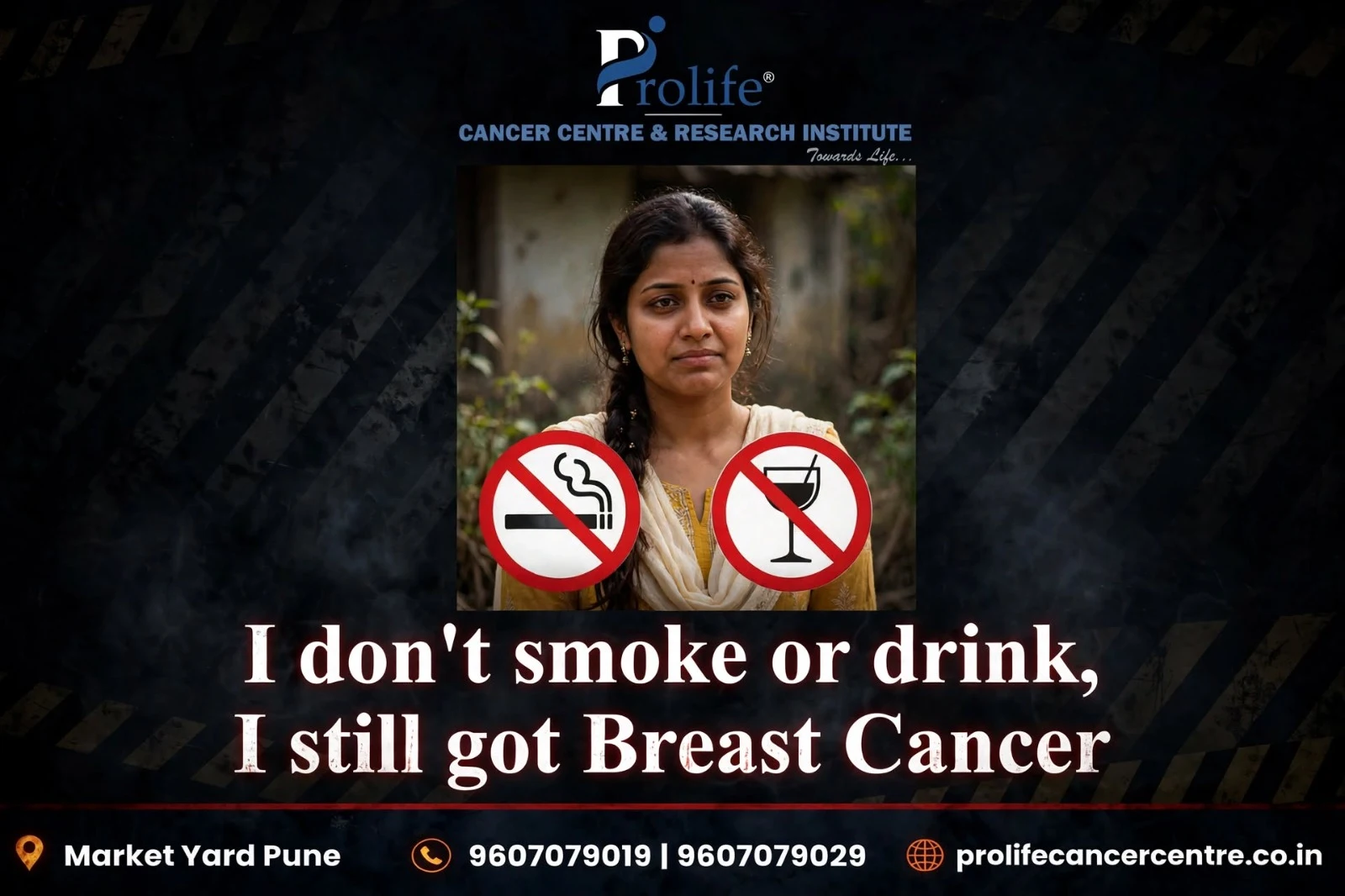
“I Don’t Smoke or Drink; I Still Got Breast Cancer” – What’s the Point of Another Alcohol Warning?
Recent updates from the AICR (American Institute for Cancer Research) suggest that even one drinking one drink a day can increase your risk of developing breast cancer compared to a woman who doesn’t drink alcohol at all. The more you drink, the higher your chances of developing breast cancer. A lot of women struggle to put these studies in context. “Are you saying if I won’t drink, I won’t get breast cancer?” or “She didn’t drink – why then did she develop breast cancer? ” are common questions.
Can We Prevent All Breast Cancers?
Here’s the truth: “We can’t prevent all cancers.” We can control a few factors that may decrease our ‘risk’ of developing cancer. From a whole population standpoint, if all women took these appropriate lifestyle precautions, we would see fewer cases of breast cancer, but that number won’t be “zero”.
What Does “Risk” Really Mean? (The Monsoon Umbrella Example)
“Risk”, however, is hard to understand from a personal standpoint. Think about it like this: Your “risk” of getting drenched during the monsoons is higher than on a hot summer day. Your “risk” of getting wet may be lowered by carrying an umbrella. Women who carry umbrellas in general will be less likely to get wet in the rain compared to those who don’t carry umbrellas. Yet it’s possible for any of us to get caught in an untimely storm, and the umbrella doesn’t suffice to protect you from all directions.
Which Breast Cancer Risk Factors Can You Change?
There are several known risk factors for breast cancer. Some of these are non-modifiable, like your genes, age of menarche or menopause and environmental carcinogens. These are like the weather that you simply can’t control. Some risk factors related to lifestyle can be modified. These include avoiding alcohol or smoking, exercising and maintaining an active lifestyle, not using hormone replacement therapy after menopause, eating fruits and vegetables and avoiding rich fatty foods. That’s carrying your raincoat, umbrella, gumboots and hoping it doesn’t rain.
Is Breast Cancer Your Fault?
At the end of the day, I encourage breast cancer patients to not think of cancer as your fault. It’s an accident happening at a cell level, over which you have little control. Don’t get demoralised by family and friends who ask you “why” it happened to you – most of them are feeling vulnerable in that moment. They may be trying to elicit an answer that will reassure it won’t happen to them. For those of you standing on the more fortunate side of the cancer statistic… do what you can to take care of yourself and stay there… but realise that there’s no “wall” between you and the other side.
