


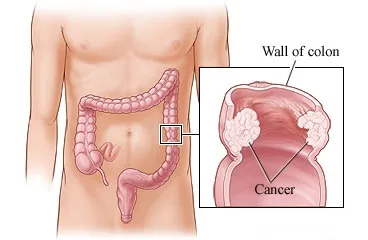
Colon Cancer ICD-10 Code: C18 Explained in Simple Words
Maybe you spotted “C18.9” on a pathology report. Maybe it was on a discharge summary or an insurance form, sitting there with no explanation. It’s normal to feel a bit alarmed and wonder what it actually means.
Here’s the short version. The colon cancer ICD-10 code is just a label. Hospitals and insurers use it to keep records tidy. It doesn’t tell you the stage of the cancer, and it doesn’t predict how things will go. Your doctor works that out from your tests. In this guide, we’ll walk through what the codes mean, how colon, rectal and metastatic codes differ, and what to do next.
What is ICD-10?
ICD-10 stands for the International Classification of Diseases, 10th Revision. The World Health Organization publishes it, and hospitals, insurers and health departments use it so everyone records diseases the same way. Every condition gets a code. In cancer care, any code that starts with the letter C describes a malignant (cancerous) tumour.
What is the ICD-10 code for colon cancer?
The main code is C18, which stands for malignant neoplasm of the colon. A number after the dot tells you which part of the colon is involved:
| ICD-10 code | Meaning |
|---|---|
| C18.0 | Caecum |
| C18.1 | Appendix |
| C18.2 | Ascending colon |
| C18.3 | Hepatic flexure |
| C18.4 | Transverse colon |
| C18.5 | Splenic flexure |
| C18.6 | Descending colon |
| C18.7 | Sigmoid colon |
| C18.8 | Overlapping sites of colon |
| C18.9 | Colon, unspecified |
If your report says C18.9, don’t read too much into it. It only means the record doesn’t name a specific part of the colon. Your doctors almost certainly know exactly where the tumour is. The code was probably just entered in a general way.
ICD-10 codes for rectal and colorectal cancer
People often say “colorectal cancer” for both colon and rectal cancer, but they have their own codes:
| Code | Meaning |
|---|---|
| C19 | Rectosigmoid junction |
| C20 | Rectum |
| C21.x | Anus and anal canal |
So when someone searches colorectal cancer ICD 10, they usually end up looking at C18, C19 and C20. The difference matters in real life, too. Rectal cancer treatment often starts with radiation or total neoadjuvant therapy before surgery. If you want the details, here’s our guide on TNT for rectal cancer.
What is the ICD-10 code for metastatic colon cancer?
When colon cancer spreads, the original tumour keeps its C18 code. The places it has spread to get their own secondary cancer codes. Some common ones:
- C78.5: Secondary malignant neoplasm of large intestine and rectum
- C78.7: Secondary malignant neoplasm of liver
- C77.2: Secondary malignant neoplasm of intra-abdominal lymph nodes
Seeing these codes can be frightening, but stage 4 doesn’t mean there’s nothing left to try. The options depend on where the cancer has spread and what the tumour tests show. Our article on whether immunotherapy can cure stage 4 colon cancer explains this in more detail.
Other related codes you might see
- D01.0: Carcinoma in situ of colon, a very early stage where the cells haven’t invaded deeper tissue
- D12.x: Benign (non-cancerous) tumours of the colon, rectum and anus, including adenomas
- K63.5: Polyp of colon
A polyp is not cancer. Still, some types, called adenomas, can turn cancerous over time if they’re left alone. That’s why doctors usually remove polyps during a colonoscopy and send them for testing.
Does the code tell me my stage or how serious it is?
No, and this is the part most people get wrong. C18.2 and C18.9 say nothing about whether the cancer is early or advanced. The stage comes from several things put together:
- Colonoscopy and biopsy
- CT, MRI or PET scans
- Blood tests, including CEA
- Pathology after surgery
- Tumour tests such as MSI/MMR status
Only your oncologist can read these results together and tell you what they mean for you.
Why does the ICD-10 code matter, then?
It may be just a label, but it does real work behind the scenes:
- Insurance claims: Insurers use the code to process and approve claims. A wrong or vague code can slow things down. You can read more on our Billing & Insurance page.
- Medical records: Codes keep your history consistent when you move between hospitals.
- Registries and research: Standard codes help doctors track cancer patterns across the country.
- Second opinions: A clear code and report help a new specialist understand your case faster.
If a code on your paperwork doesn’t match your diagnosis, ask the hospital’s billing or records team to check it. Mistakes do happen, and they’re usually easy to fix.
What are the symptoms of colon cancer?
Early colon cancer often causes no symptoms at all, which is why it can go unnoticed. Here’s what to look out for:
- A change in bowel habits lasting more than a few weeks, such as constipation, diarrhoea or thinner stools
- Blood in the stool or bleeding from the rectum
- Ongoing belly pain, cramps or bloating
- A feeling that your bowel hasn’t fully emptied
- Weight loss you can’t explain
- Constant tiredness or anaemia
Plenty of these symptoms also come from piles or stomach infections, so they’re not always cancer. But please don’t assume they’re harmless either. If any of them last more than a few weeks, speak to a cancer doctor rather than waiting. If you want to read more, see Blood in stool: could it be colorectal cancer? and Early colorectal cancer symptoms.
Who is at higher risk?
Your risk is higher if you have any of these:
- You’re over 45-50, although cases in younger adults are rising
- A close relative has had colon or rectal cancer
- You have an inherited condition such as Lynch syndrome or familial adenomatous polyposis (see our guide to hereditary colorectal cancer)
- You’ve had polyps or inflammatory bowel disease
- Lifestyle factors: obesity, little exercise, a diet heavy in red and processed meat, smoking and alcohol
How is colon cancer diagnosed and treated?
Diagnosis. The usual first step is a colonoscopy. The doctor looks inside your colon with a thin camera and takes a small tissue sample (biopsy) if anything looks wrong. Scans then show whether the cancer has spread. At a dedicated centre, a team of cancer specialists reviews these results together before suggesting a plan. You can read more here: Colonoscopy for colon cancer detection in Pune.
Treatment. The plan depends on the stage and the type of tumour. It may include:
- Surgery to remove the tumour and nearby lymph nodes, often through minimally invasive methods
- Chemotherapy before or after surgery
- Targeted therapy or immunotherapy for selected tumour types
- Radiation, mostly used for rectal cancer
For suitable patients, keyhole surgery by an experienced laparoscopic cancer surgeon can mean smaller cuts and a quicker recovery. Robotic surgery offers similar benefits. To learn more, see robotic colorectal cancer surgery and robotic cancer surgery in Pune.
Can colon cancer be prevented or caught early?
Regular colon cancer screenings are your best protection. A colonoscopy can find and remove polyps before they ever turn into cancer. Your doctor will tell you when to begin, based on your age and family history. Everyday habits help too: eat more fibre, cut down on processed meat, stay active, keep a healthy weight and avoid tobacco.
Colon cancer care in Pune: Prolife Cancer Centre & Research Institute
If a colon cancer code has turned up in your reports, or you have symptoms or a family history, getting a specialist’s opinion early makes a real difference. At Prolife Cancer Centre & Research Institute in Market Yard, Gultekdi, Pune, patients get evaluation, surgery, chemotherapy and a treatment plan built around them. Dr. Sumit Shah, a surgical oncologist and robotic cancer surgeon, leads their care. You can learn more about our colorectal cancer treatment and our colon cancer symptoms, stages and treatment guide.
Found a colon cancer code on your report or insurance form and not sure what it means? Book a consultation at Prolife Cancer Centre, Pune, and get a clear explanation and a treatment plan.
👉 Book Appointment | 📞 +91-9607079019
FAQ
1. What is the ICD-10 code for colon cancer?
The main code is C18. The numbers from C18.0 to C18.9 show which part of the colon is affected, and C18.9 means colon, unspecified.
2. What is the ICD-10 code for rectal cancer?
Rectal cancer is C20. C19 is used for the rectosigmoid junction, where the colon meets the rectum.
3. What is the ICD-10 code for metastatic colon cancer?
The original tumour stays C18. The spread is coded separately, for example C78.5 for the large intestine and rectum, and C78.7 for the liver.
4. Does C18.9 mean my cancer is advanced?
No. The code only records where the cancer is. Your stage is decided by scans, biopsy and pathology.
5. Is ICD-10 the same as ICD-10-CM?
Not exactly. ICD-10-CM is the US clinical version. The colon cancer codes (C18.0 to C18.9) are the same in both, but ICD-10-CM adds extra codes for things like personal history and screening. In India, hospitals commonly use the WHO ICD-10.
6. Where can I get colon cancer treatment in Pune?
You can visit Prolife Cancer Centre & Research Institute at Market Yard, Gultekdi, which offers evaluation, surgery, chemotherapy and treatment planning.
If you are looking for a colorectal cancer surgeon in pune, a surgical oncologist in pune or a cancer surgeon in pune, you can consult Dr. Sumit Shah at Prolife Cancer Centre & Research Institute, Market Yard, Gultekdi, Pune.
Conclusion
The colon cancer ICD-10 code, usually C18, is simply a record label that helps with billing, insurance and paperwork. It doesn’t describe your stage or your outlook. What counts is the full picture: your symptoms, scans, biopsy and pathology. If you’ve come across this code and have questions, talk to a specialist soon. Early detection and treatment give you the best chance of a good outcome.
