


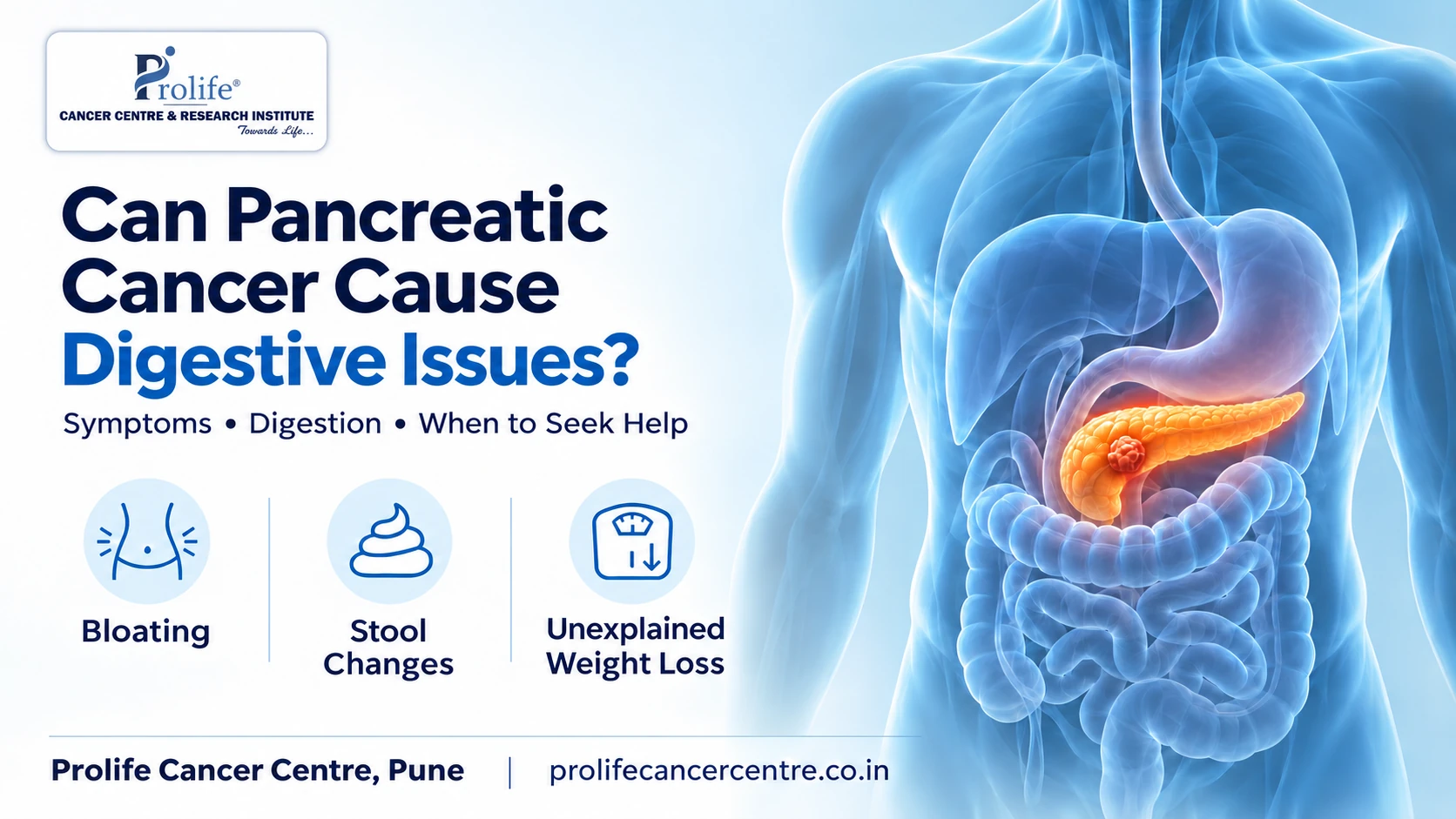
Can Pancreatic Cancer Cause Digestive Issues?
Yes. Pancreatic cancer can cause digestive issues by reducing the digestive enzymes that reach the intestine, blocking the bile duct, or narrowing the first part of the small intestine. This may cause greasy stools, bloating, nausea, loss of appetite and unexplained weight loss. These symptoms are also common in many non-cancer conditions, so a medical assessment is essential.
Occasional indigestion alone does not mean pancreatic cancer. New symptoms that continue, keep returning, or occur with jaundice or weight loss should be checked by a doctor.
Key takeaways
- Pancreatic cancer can affect digestion through enzyme shortage, bile duct blockage or intestinal narrowing.
- Greasy, pale or hard-to-flush stools, unexplained weight loss and jaundice deserve prompt review.
- New yellowing of the eyes or skin needs urgent medical assessment.
- Enzyme replacement (PERT) improves digestion but does not treat the cancer itself.
- Most digestive symptoms have non-cancer causes, but symptoms lasting more than two weeks should not be self-treated for long.
Why Does Pancreatic Cancer Affect Digestion?
The pancreas makes enzymes that break down fats, proteins and carbohydrates. These enzymes travel through the pancreatic duct into the small intestine, where they mix with food. The pancreas also makes hormones that help control blood sugar.
Pancreatic cancer can disrupt digestion in three main ways:
- Reduced enzyme delivery: A tumour may block the pancreatic duct or damage enzyme-producing tissue.
- Bile duct blockage: A tumour near the bile duct can stop bile reaching the intestine. Bile helps digest fat, and a blockage can cause jaundice.
- Pressure on the digestive tract: A growing tumour may narrow the duodenum, the first part of the small intestine, so food passes with difficulty.
When too few enzymes reach the intestine, the condition is called pancreatic exocrine insufficiency (PEI). Fats and other nutrients then pass through the bowel without being absorbed properly.
What Are the Digestive Symptoms of Pancreatic Cancer?
| Symptom | Likely reason | What to do |
|---|---|---|
| Greasy, pale, floating or hard-to-flush stools | Poor fat digestion (steatorrhoea) | See a doctor if it persists |
| Bloating, gas, indigestion | Food not digested fully | Review if it is new for you or does not settle |
| Diarrhoea or constipation | Enzyme shortage, medicines or bowel changes | Seek advice if it continues |
| Feeling full quickly, nausea, vomiting | Slow stomach emptying or duodenal narrowing | Urgent review if you cannot keep fluids down |
| Weight loss, loss of appetite | Reduced eating, poor absorption, cancer effects | Get checked if unintentional |
| Yellow eyes or skin, dark urine, itching | Bile duct blockage | Urgent assessment |
| Upper-abdominal or back pain | Tumour pressing on nearby structures | Medical review if persistent |
| New-onset diabetes | Pancreas affected by the tumour | Discuss with your doctor, especially with other symptoms |
Why Do Pancreatic Cancer Stools Look Greasy or Pale?
Poor fat digestion causes steatorrhoea (steatorrhea), meaning excess fat in the stools. Stools may look oily, smell unusually strong, float or be hard to flush.
Floating stools alone do not diagnose pancreatic cancer. Persistent changes, especially with weight loss, need medical attention.
Can Pancreatic Cancer Cause Bloating, Gas and Indigestion?
Yes. Some people have ongoing bloating, excess gas or discomfort after meals when food is not digested properly. Because gas and acidity are so common, a change from your usual pattern matters most. For example, symptoms may continue despite your usual antacid or acid-reducing medicine.
Can Pancreatic Cancer Cause Diarrhoea or Constipation?
It can. Undigested fat may cause loose, frequent stools, while a blockage, reduced eating or pain medicines may cause constipation. Neither is specific to pancreatic cancer, but a lasting change in bowel habit should be reviewed.
Why Do I Feel Full Quickly or Feel Sick?
Feeling full unusually fast is called early satiety. Together with reduced appetite, it makes eating enough difficult. If a tumour narrows the duodenum, food may not leave the stomach normally, leading to nausea and vomiting. Repeated vomiting needs prompt assessment, particularly if you cannot keep fluids down.
Can Pancreatic Cancer Cause Unexplained Weight Loss and Loss of Appetite?
Yes. Weight loss may come from eating less, poor absorption and cancer-related changes in metabolism. Losing weight without trying should be investigated, especially with digestive symptoms or abdominal pain.
What Does Jaundice Mean?
Jaundice is yellowing of the skin or whites of the eyes. It can happen when a tumour blocks the bile duct. Dark urine, pale stools and itching may also occur. Gallstones, liver conditions and bile duct cancer can also cause jaundice, but new jaundice needs urgent medical assessment whatever the cause.
Can Pancreatic Cancer Cause Upper-Abdominal or Back Pain?
It may cause upper-abdominal discomfort that spreads to the back, sometimes worse after eating or when lying down. Persistent pain, particularly with weight loss or jaundice, should not be treated indefinitely as “acidity” without a medical review.
Can Pancreatic Cancer Cause New Diabetes?
The pancreas also makes insulin, so a tumour can sometimes upset blood sugar control. Diabetes that appears suddenly, especially later in life and with weight loss or other symptoms above, should be discussed with a doctor. Most new diabetes is not caused by cancer.
Who Is at Higher Risk of Pancreatic Cancer?
Known risk factors include increasing age, smoking, heavy alcohol use, obesity, diabetes, gallstones, a family history of pancreatic cancer and certain rare inherited conditions. Having a risk factor does not mean you will develop the disease, and many people diagnosed have none. You can read more on our pancreatic cancer page.
When Should You See a Doctor?
Seek urgent medical assessment for new yellowing of the eyes or skin, or for repeated vomiting.
Arrange a consultation if you notice unexplained weight loss, ongoing stool changes, loss of appetite, or abdominal or back pain that does not improve. If digestive symptoms last more than two weeks, keep getting worse, or feel unusual for you, see a doctor rather than repeatedly treating them yourself.
How Is Pancreatic Cancer Diagnosed?
A doctor will usually start with your history, an examination and blood tests. Imaging such as ultrasound, CT or MRI helps show the pancreas, and PET scans are sometimes used. Endoscopic ultrasound (EUS) examines the pancreas from inside the stomach, and a biopsy takes a small tissue sample for testing. A blood marker called CA 19-9 is sometimes used, but it is not a screening test and can be raised in other conditions. Once cancer is confirmed, staging tests show how far it has spread and guide the treatment plan.
How Are Digestive Problems Managed?
Treatment depends on whether symptoms come from enzyme insufficiency, a blockage, treatment side effects or another condition.
What Is Pancreatic Enzyme Replacement Therapy (PERT)?
PERT supplies enzymes that help digest food. A clinician may prescribe it when enzyme insufficiency is suspected or confirmed. It is taken with meals and snacks as instructed, and the plan may be adjusted if greasy stools, bloating or weight loss continue. It improves digestion but does not treat the cancer.
How Is a Blocked Bile Duct or Intestine Treated?
A specialist may recommend a stent to open a blocked bile duct, or a bypass operation. A biliary bypass reroutes bile around the blockage, and a gastric bypass lets food pass from the stomach into the small intestine when the tumour blocks its flow. The choice depends on where the blockage is and the person’s overall treatment plan.
Can Diet and Nutrition Support Help?
A dietitian can help maintain food intake and manage weight loss. Smaller, more frequent meals may be easier to tolerate, and anti-nausea medicines can help when sickness limits eating. Avoid starting a restrictive diet without professional advice, especially if you are already losing weight.
How Is Pancreatic Cancer Itself Treated?
Treatment is planned individually and depends on the type, stage, tumour location and the person’s general health. At Prolife Cancer Centre, care for pancreatic cancer may include:
- Surgery: a Whipple procedure, distal pancreatectomy or total pancreatectomy, depending on where the tumour is. Minimally invasive laparoscopic and robotic approaches may be suitable in selected cases.
- Chemotherapy and targeted therapy, alone or alongside surgery.
- Palliative procedures, such as a stent or bypass, to relieve blockage and improve comfort when a tumour cannot be removed.
Radiation therapy is also used for pancreatic cancer in general, and your treating team will advise whether it is appropriate for you. Most people who have pancreatic surgery stay in hospital for a few days afterwards, but recovery varies.
Cancer Consultation in Pune
If you are looking for a cancer specialist in Pune because of concerning symptoms or an abnormal report, bring your previous prescriptions, scan reports and test results. First-time patients can read our new patient guide, and our billing and insurance page explains payment options.
Dr. Sumit Shah is a robotic surgical oncologist in Pune and the founder of Prolife Cancer Centre & Research Institute. He has more than 22 years of experience in surgical oncology, holds DNB qualifications in surgery and surgical oncology, and is a Fellow of the American College of Surgeons. His profile lists pancreatic and other gastrointestinal cancers among the conditions he treats. A consultation can help clarify your findings and the next steps.
Book an appointment: Book online or call +91 96070 79019 / +91 96070 79029
Address: S.No. 557/A/A/15C, Hissa No. 17/1, Final Plot No. 158/1, Gultekdi, Market Yard, Pune – 411037
Website: Prolife Cancer Centre
Related reading: Pancreatic Cancer Treatment in Pune · Hepato-Pancreato-Biliary Cancer · Gastrointestinal Cancer · More health articles
Frequently Asked Questions
What are the first warning signs of pancreatic cancer?
Early pancreatic cancer may cause no noticeable symptoms. Possible warning signs include unexplained weight loss, jaundice, loss of appetite, upper-abdominal or back pain and stool changes. No single symptom reliably identifies early pancreatic cancer.
What are seven overlooked warning signs of pancreatic cancer?
Seven possible warning signs are persistent indigestion or bloating, upper-abdominal or back pain, greasy stools, unexplained weight loss, loss of appetite, jaundice and new-onset diabetes. This is an awareness list, not a diagnostic checklist, because other conditions can cause the same findings.
Does pancreatic cancer cause diarrhoea or constipation?
It can cause either. Undigested fat may lead to loose, frequent stools, while a blockage, reduced eating or pain medicines may cause constipation. A lasting change in bowel habit should be reviewed by a doctor.
Can gas and acidity be a sign of pancreatic cancer?
Usually not. Gas and acidity are common and mostly harmless. See a doctor if symptoms are new, continue despite treatment, last more than two weeks, or come with weight loss, jaundice or back pain.
Are pancreatic cancer symptoms different in men and women?
The main warning symptoms are broadly similar in men and women. They depend more on the tumour’s location and effects than on sex.
Can you live with pancreatic cancer?
Yes. Treatment can help people live longer and manage symptoms, and some patients with localised disease can receive treatment intended to remove the cancer. Outlook varies with the type, stage, general health and response to treatment, and survival statistics cannot predict an individual’s outcome.
What organ does pancreatic cancer spread to first?
There is no fixed order of spread. It may involve nearby tissues and lymph nodes, or spread to the liver, abdominal lining, lungs or bones. Scans and staging tests establish the pattern in each patient.
Does pancreatic enzyme treatment cure pancreatic cancer?
No. PERT replaces missing digestive enzymes and improves nutrient absorption. Cancer treatment needs a separate, individualised oncology plan.
