


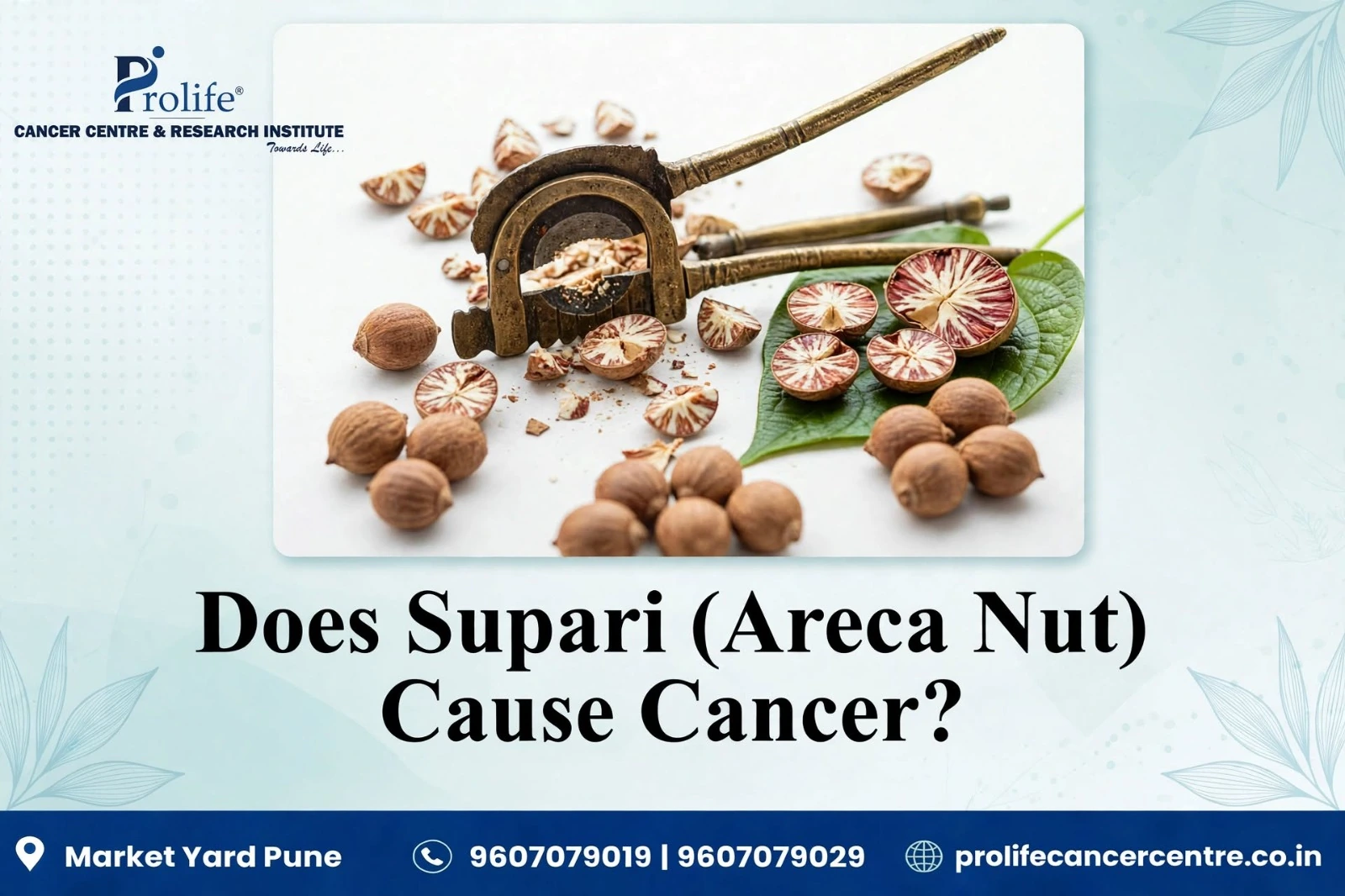
Does Supari (Areca Nut) Cause Cancer?
Yes. Areca nut, commonly called supari, causes cancer. The International Agency for Research on Cancer (IARC), the cancer research agency of the World Health Organization, classifies it as a Group 1 carcinogen. That is the highest risk category, the same as tobacco smoking and asbestos.
Many people in Pune and across Maharashtra chew supari, gutkha or pan masala every day without knowing this. This guide explains the risk, the early signs of oral cancer and when to get checked.
What Does IARC Say About Areca Nut and Betel Quid?
IARC lists three forms separately as “carcinogenic to humans”:
- Areca nut on its own
- Betel quid (paan) without tobacco
- Betel quid with tobacco
So the belief that “supari without tobacco is safe” is a myth. Plain supari, pan masala and tobacco-free gutkha can all cause oral cancer.
How Does Supari Cause Mouth Cancer?
The areca nut contains arecoline, a chemical that irritates the lining of the mouth and damages cells and DNA each time you chew. Over time this can lead to two pre-cancerous conditions:
- Oral submucous fibrosis (OSMF): the cheek lining becomes stiff and fibrous, the mouth cannot open fully, and spicy food causes burning.
- Leukoplakia: a white patch inside the mouth that does not go away.
If chewing continues, these conditions can turn into mouth cancer. Risk rises with the number of quids per day and the number of years of chewing. In India, around half of oral cancers are linked to betel quid and areca nut chewing.
What Are the Early Warning Signs of Mouth Cancer?
Get examined promptly if you notice any of these:
- Mouth not opening fully
- Burning when eating chilli or hot food
- A white or red patch on the cheek, tongue or gums
- A mouth ulcer that does not heal in more than 2 weeks
- Stiffness or tight bands inside the cheek
These signs do not always mean cancer, but they should never be ignored. Early diagnosis makes oral cancer much easier to treat. For more on persistent symptoms, read about mouth cancer symptoms and when to see a specialist.
How Can I Quit Supari and Gutkha?
The safest choice is to stop completely. Areca nut is addictive, so quitting can be hard, especially during stressful periods. These steps help:
- Set a quit date and tell a family member or friend
- Cut down gradually if stopping at once feels too hard
- Replace the habit with sugar-free chewing gum, fennel seeds (saunf) or cloves
- Ask a doctor about counselling and de-addiction support
How Is Mouth Cancer Diagnosed and Treated?
A doctor starts with a clinical examination of the mouth and may advise a biopsy to confirm whether a patch or ulcer is cancer. If cancer is found, treatment depends on the stage and location and may include surgery, radiation or chemotherapy. You can read more about oral cancer treatment in Pune.
When Should I See a Doctor in Pune?
Book an examination if you chew supari, gutkha or pan masala and have any mouth symptom, even a mild one. The team at Prolife Cancer Centre & Research Institute, Market Yard, Gultekdi, Pune, can examine you and advise on next steps. Learn more about Dr Sumit Shah and the oral cancer specialist page, or call to book an appointment [VERIFY: phone number to use].
FAQs
Is supari without tobacco safe?
No. IARC classifies areca nut alone as a Group 1 carcinogen.
Is pan masala without tobacco harmful?
Yes. If it contains areca nut, it carries a cancer risk.
Can OSMF turn into cancer?
Yes, OSMF is a pre-cancerous condition, so regular check-ups matter.
How long does it take for supari to cause cancer?
There is no fixed time. Risk depends on how many quids you chew daily and for how many years.
Can mouth damage reverse if I quit?
Stopping early can improve some changes, but any persistent patch, ulcer or stiffness still needs a doctor’s examination.
