



Endometrial Cancer: Causes, Symptoms & Treatment in Pune
Endometrial cancer starts in the endometrium, the tissue that lines the inside of the uterus. It’s one of the more common cancers affecting the female reproductive system, and the good news is that it’s often caught early — mainly because it tends to announce itself early too, usually through abnormal bleeding.
The most telling endometrial cancer symptom is bleeding after menopause. It’s not something to brush off as “just one of those things.” Bleeding at that stage of life isn’t normal, and while it doesn’t automatically mean cancer, it does mean a doctor should take a look.
If you’re researching Endometrial Cancer Treatment in Pune — whether for yourself or a family member — knowing what to watch for, what raises the risk, how doctors confirm a diagnosis, and what treatment actually involves can make the whole process feel a lot less overwhelming.
What Causes Endometrial Cancer?
There’s rarely one clear cause behind endometrial cancer. It’s usually a mix of factors coming together, including:
- Age — risk climbs as you get older
- Obesity
- Type 2 diabetes
- PCOS
- Endometrial hyperplasia (thickening of the uterine lining)
- Hormonal factors linked to estrogen
- A family history of certain cancers
- Lynch syndrome, an inherited genetic condition
Worth remembering: ticking one or more of these boxes doesn’t mean cancer is inevitable. Plenty of people with several risk factors never develop it, and some people with none still do.

What Are the Symptoms of Endometrial Cancer?
The symptoms to keep an eye on include:
- Bleeding after menopause
- Bleeding between periods
- Periods that are unusually heavy or irregular
- Unusual vaginal discharge
- Pelvic pain or discomfort that doesn’t go away
If you’ve been through menopause and notice any bleeding, don’t wait it out — get it checked.
How Is Endometrial Cancer Diagnosed?
Diagnosis typically starts simply, with a pelvic exam and a transvaginal ultrasound. If the ultrasound picks up anything that looks off, the next step is usually an endometrial biopsy, where a small tissue sample is taken and examined to confirm what’s going on.
One thing people often get wrong: a Pap smear doesn’t screen for endometrial cancer. It’s designed to catch cervical changes, not uterine ones, so a normal Pap result shouldn’t be taken as reassurance if you’re having abnormal bleeding.
If bleeding persists, the right move is to see a doctor rather than trying to explain it away. Anyone searching for an Endometrial Cancer Doctor in Pune should look for a specialist who can properly evaluate the symptoms and map out next steps — the team at Prolife Cancer Centre & Research Institute handles exactly this kind of evaluation.
What Is the Treatment for Endometrial Cancer?
Treatment isn’t one-size-fits-all — it’s shaped by the stage of the cancer, its specific characteristics, and the patient’s overall health.
Surgery is the most common approach for cancer that’s still localized, and it usually involves removing the uterus. Depending on the case, doctors may also bring in:
- Radiation therapy
- Chemotherapy
- Hormone therapy
- Targeted therapy
- Immunotherapy
None of this is decided on the spot — proper staging and evaluation come first, and the treatment plan is built around what that reveals.
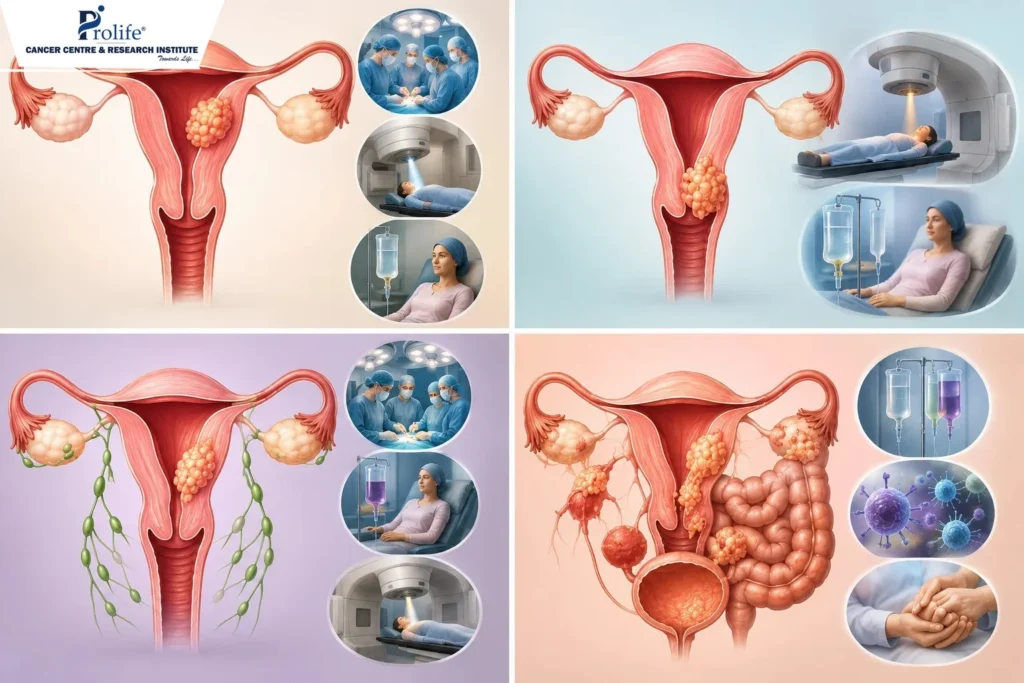
Endometrial Cancer Surgery in Pune
For patients with localized disease, surgery often plays a central role. How extensive it needs to be comes down to the stage, the tumor itself, and the individual patient.
If you’re looking for an Endometrial Cancer Surgeon in Pune or a Uterine Cancer Surgeon in Pune, it’s worth seeking out someone with real experience in cancer surgery specifically, not general gynecologic surgery alone.
In suitable cases, minimally invasive or robotic techniques may be an option worth discussing. A Robotic Surgical Oncologist in Pune can assess whether that approach fits a particular patient’s situation.
Gynecologic Cancer Specialist in Pune
Endometrial and uterine cancers fall under the broader umbrella of gynecologic cancers — cancers of the female reproductive organs. A Gynecologic Cancer Specialist in Pune, gynecologic cancer surgeon, or gynecologic oncologist is typically involved somewhere along the way, whether at diagnosis, treatment planning, or both.
You may also come across the term Gynaecological Oncologist in Pune while searching — it refers to the same kind of specialist, one who manages cancers of the uterus, ovaries, cervix, and other reproductive organs. Prolife’s team also treats related conditions such as ovarian cancer and cervical cancer under the same gynecologic oncology umbrella.
Endometrial Cancer Treatment in Pune
If you or someone close to you has been diagnosed with uterine or endometrial cancer, the next step is a proper specialist evaluation to figure out what treatment path makes sense.
For Endometrial Cancer Treatment in Pune, patients can consult Dr. Sumit Shah, Surgical Oncologist at Prolife Cancer Centre & Research Institute, Market Yard, Gultekdi, Pune, for evaluation and surgical treatment planning.
Whether you’re searching for an Endometrial Cancer Specialist in Pune, Uterine Cancer Specialist in Pune, Surgical Oncologist in Pune, Oncologist in Pune, or Cancer Surgeon in Pune, the right next step is the same: get a qualified specialist’s opinion based on your specific diagnosis and stage. You can book an appointment here or reach out through the contact page.
Noticed bleeding after menopause? Don’t sit on it. Get evaluated.
FAQs About Endometrial Cancer
Is postmenopausal bleeding always cancer?
No — there are several possible causes. But because cancer is one of them, any bleeding after menopause deserves a medical evaluation, not a wait-and-see approach.
Can ultrasound confirm endometrial cancer?
An ultrasound can flag changes in the uterus that warrant a closer look, but it can’t confirm cancer on its own. A tissue biopsy is generally needed to actually confirm the diagnosis.
Is endometrial cancer treatable?
Yes. There are several effective treatment routes available, and which one (or combination) makes sense depends on the stage, the cancer’s characteristics, and the patient’s overall health.
Who should I consult for endometrial cancer in Pune?
Anyone with suspected or confirmed endometrial cancer should see a qualified gynecologic cancer specialist, gynecologic oncologist, or surgical oncologist for evaluation, staging, and a treatment plan tailored to their case.
Who performs surgery for endometrial cancer?
Depending on where you’re being treated, surgery is usually carried out by a trained gynecologic cancer surgeon, gynecologic oncologist, or surgical oncologist with dedicated experience in cancer surgery — not just general surgery.
Related reading: Modern Treatment Options for Uterine Cancer · Menopause Bleeding and Uterine Cancer