


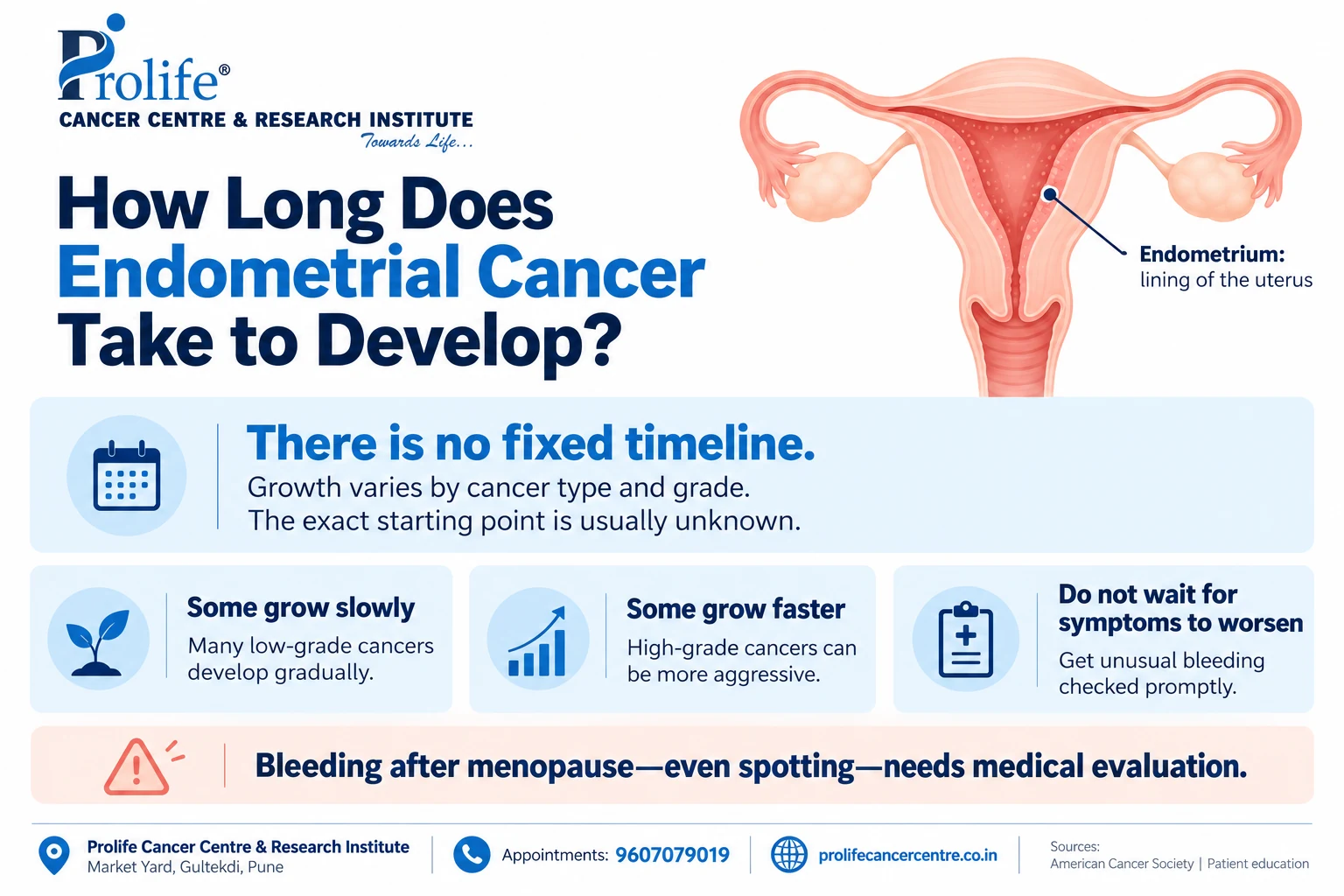
Endometrial cancer is a type of uterine cancer that begins in the inner lining of the uterus, called the endometrium. It may develop over several years in some patients, sometimes following precancerous changes. However, certain aggressive types can progress more quickly.
There is no fixed timeline for endometrial cancer to develop. Its progression depends on the cancer subtype, tumour characteristics, hormonal factors and individual health.
Recognising early symptoms, particularly abnormal vaginal bleeding or bleeding after menopause, can help women seek timely medical evaluation. People searching for a uterine cancer oncologist in Pune, a uterine cancer doctor in Pune, or a uterine cancer specialist in Pune should prioritise appropriate qualifications, relevant experience and access to diagnostic and treatment services. To understand the condition and care options in more detail, visit the uterine cancer page at Prolife Cancer Centre.
How Long Does Endometrial Cancer Take to Develop?
Endometrial cancer can develop gradually in some patients, but the exact time between the earliest cellular changes and diagnosis is usually impossible to establish.
1. Endometrial hyperplasia
Endometrial hyperplasia occurs when the uterine lining becomes thicker than usual. It may be associated with prolonged oestrogen exposure without sufficient progesterone.
Some forms remain stable or resolve, while others can progress. Endometrial intraepithelial neoplasia (EIN), also called atypical endometrial hyperplasia, is particularly important because it is associated with an increased risk of endometrial cancer.
2. Endometrioid endometrial cancer
Endometrioid adenocarcinoma is a common type of endometrial cancer. Many low-grade tumours behave less aggressively than high-grade tumours, but growth rates vary.
3. Aggressive uterine cancers
Certain cancers, including uterine serous carcinoma and carcinosarcoma, can behave more aggressively. Their progression depends on the tumour’s characteristics and cannot be predicted using a single timeline.
For more information, consult the National Cancer Institute’s endometrial cancer treatment guide.
What Are the Early Symptoms of Endometrial Cancer?
Common warning signs include:
- Vaginal bleeding after menopause.
- Heavy or prolonged menstrual periods.
- Bleeding between periods.
- Unusual vaginal discharge.
- Persistent pelvic pain or discomfort.
Bleeding after menopause should always be evaluated by a healthcare professional, even when it occurs only once. Although many causes are not cancer, appropriate assessment is important.
A qualified cancer specialist in Pune can help arrange the investigations needed to identify the cause.
What Causes Endometrial Cancer?
Risk factors include increasing age, obesity, prolonged oestrogen exposure, diabetes, PCOS-related irregular ovulation, certain reproductive factors and inherited conditions such as Lynch syndrome.
Having a risk factor does not mean that someone will develop cancer, and the disease can also occur without obvious risk factors.
How Is Endometrial Cancer Diagnosed?
Diagnosis may involve:
- Medical consultation and review of symptoms.
- Transvaginal ultrasound to assess the uterine lining.
- Endometrial biopsy to examine tissue under a microscope.
- Additional imaging, such as MRI or CT, when indicated.
A biopsy is an important investigation for confirming endometrial cancer. A Pap test is not a reliable screening test for this disease.
What Are the Treatment Options for Endometrial Cancer?
Treatment depends on the cancer’s stage, grade, subtype, molecular characteristics and the patient’s overall health.
Surgery
Surgery is the primary treatment for many patients with cancer confined to the uterus. It commonly involves hysterectomy and may include removal of the fallopian tubes and ovaries and assessment of lymph nodes.
Patients looking for a uterine cancer suregon In Pune, use the correctly spelt search phrase ‘uterine cancer surgeon in Pune’ and verify the surgeon’s qualifications and relevant experience.
Radiation therapy
Radiation may be recommended after surgery or as a primary treatment in selected circumstances.
Chemotherapy
Chemotherapy may be used for certain high-risk, advanced or recurrent cancers. Patients researching chemotherapy costs in Pune should request an individualised estimate because costs vary by medicines, treatment cycles, investigations and hospital facilities.
Hormone therapy, immunotherapy and targeted therapy
Some patients may benefit from these treatments depending on their tumour characteristics and clinical circumstances.
For people researching uterine cancer treatment in Pune, an individualised consultation can help clarify suitable treatment options and expected outcomes. Learn more on the uterine cancer treatment page or book an appointment at Prolife Cancer Centre.
How to Choose a Cancer Specialist or Hospital in Pune
When evaluating a uterine cancer hospital in Pune, consider specialist qualifications, diagnostic facilities, surgical expertise, pathology services, access to radiation and medical oncology, and follow-up care.
People searching for the best oncologist in Pune, the best medical oncologist in Pune, the best cancer specialist in Pune, or the best cancer surgeon in Pune should compare verified qualifications and relevant clinical experience rather than relying on rankings alone. You can read about Dr Sumit Shah and the team at Prolife Cancer Centre to see their qualifications and experience.
Similarly, searches for ‘cancer hospital in pune‘, ‘cancer hospital pune’, ‘cancer hospitals in pune’, ‘pune cancer hospital’, ‘pune best cancer hospital’, and ‘best hospital in pune for cancer treatment’ reflect a desire to compare facilities. Confirm that the hospital offers the services required for your diagnosis.
Patients may also research Prolife Cancer Center Pune and Cancer Center Lifepoint Hospital Pune. Contact the facilities directly to verify their current services, specialist availability and suitability for gynaecological cancer care. This article does not independently verify or rank either facility.
Frequently Asked Questions
How quickly can endometrial cancer develop?
Some cancers develop gradually over several years, while aggressive subtypes may progress more quickly. There is no universal timeline.
Can endometrial cancer be cured?
Many early-stage cases can be treated successfully, often with surgery. Outcomes depend on the cancer type, stage, grade and other clinical factors.
Which doctor treats uterine cancer in Pune?
A gynaecologist may perform the initial evaluation. A gynaecologic oncologist or appropriately qualified cancer specialist can guide further treatment. You can find details on the Prolife uterine cancer page or consult Dr Sumit Shah.
How do I find a cancer hospital near me?
Verify the facility’s location, specialist qualifications, diagnostic services and available treatments. A nearby hospital is not necessarily the most appropriate one for every diagnosis.
Conclusion
Endometrial cancer may develop over several years in some patients, but aggressive forms can progress more quickly. Abnormal vaginal bleeding, especially after menopause, should not be ignored.
If you are researching uterine cancer treatment in Pune, seek a timely medical evaluation and choose a specialist with appropriate experience. Read more about uterine cancer care at Prolife, or contact Prolife Cancer Centre to discuss your symptoms.
Medical disclaimer: This article is for educational purposes only and does not replace professional medical advice, diagnosis or treatment.
