

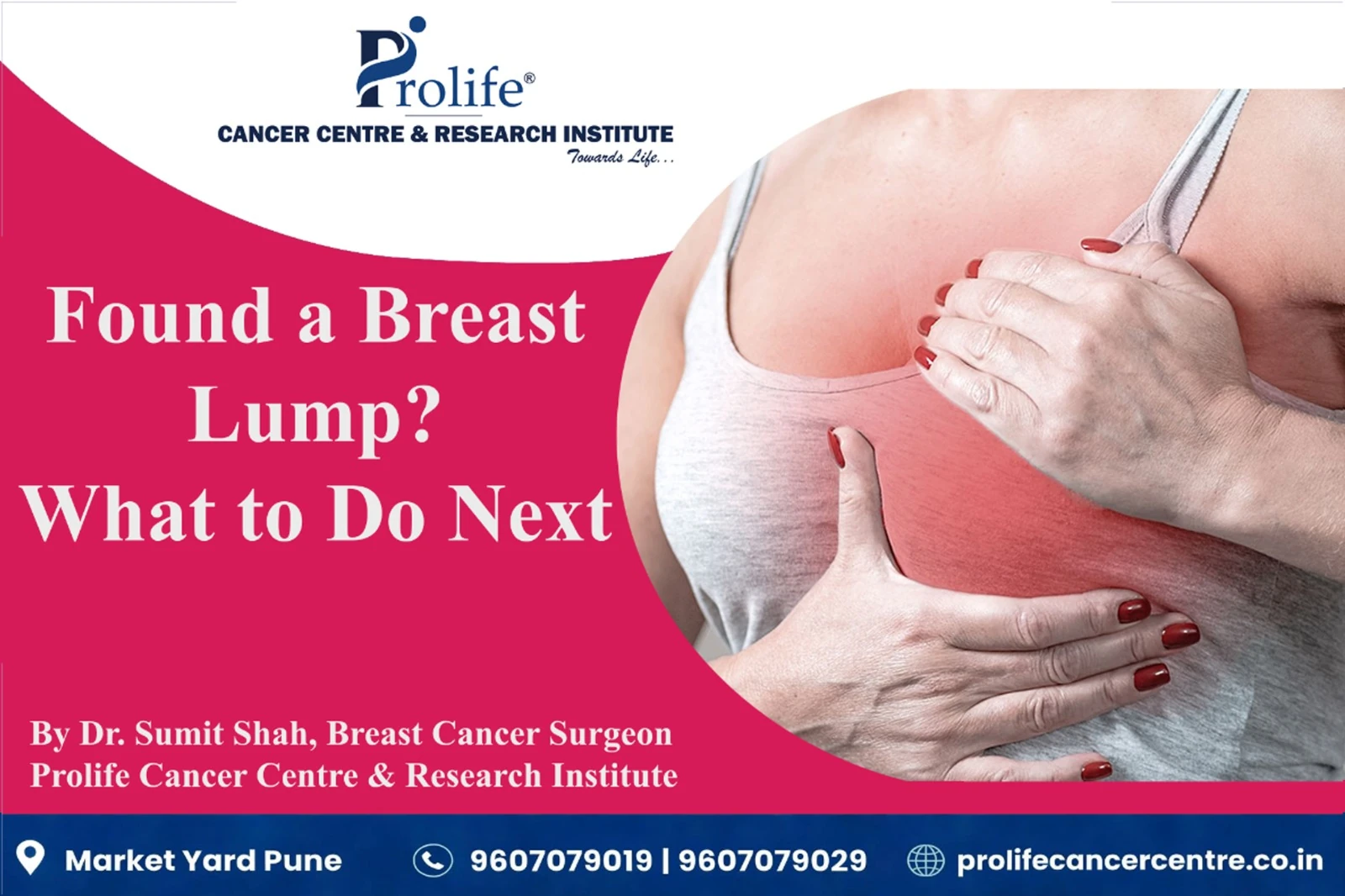
Found a Breast Lump? What to Do Next | Breast Cancer Surgeon in Pune
By Dr. Sumit Shah, Breast Cancer Surgeon
Prolife Cancer Centre & Research Institute, Pune
Finding a lump in your breast can feel frightening. Your mind may immediately jump to cancer, surgery and concerns about your family. My first advice is simple: take a breath, avoid self-diagnosis and arrange a medical examination.
Most breast lumps are not cancerous. However, every new breast lump should be checked by a doctor, even if it is small or painless. An examination helps identify the cause and determine whether further tests are needed. (nhs.uk)
Does a breast lump always mean breast cancer?
No. A breast lump may be a fluid-filled cyst, a non-cancerous growth called a fibroadenoma, or a change associated with infection. Some lumps are breast cancer.
You cannot reliably tell the difference by touching the lump. A painful lump is not automatically harmless, and a painless lump should not be ignored. (nhs.uk, cancer.org)
What should you do after finding a breast lump?
Book an appointment promptly. Consult a doctor experienced in breast conditions or a breast cancer surgeon in Pune. Do not wait several weeks to see whether a new lump disappears.
Note the changes you have noticed. Write down when you first felt the lump, its location, and whether there is pain, nipple discharge or a change in breast appearance.
Carry previous reports. Bring earlier mammograms, ultrasound reports and your medication list. Tell your doctor if you are pregnant, breastfeeding or have a family history of breast or ovarian cancer.
Ask questions. Understanding why a test is recommended can make the process less stressful. Bringing a trusted family member may also help.
Which breast changes need medical attention?
A new breast or underarm lump, skin dimpling, a newly inverted nipple, or bloodstained nipple discharge should be assessed.
Seek urgent medical advice if your breast is painful, hot or red, particularly if you also have fever or feel unwell. These symptoms may indicate an infection or abscess. (cancer.gov, nhs.uk)
How is a breast lump diagnosed?
Breast lump evaluation starts with a medical history and examination. Depending on your age and findings, your doctor may recommend a breast ultrasound or diagnostic mammogram.
If necessary, a needle biopsy takes a small tissue sample for laboratory examination. Being advised to have a biopsy does not mean you have cancer. It helps establish an accurate diagnosis. (cancer.gov, cancer.org)
Does every breast lump require surgery?
No. Treatment depends on the cause. Some benign lumps need monitoring, while others may require treatment. If cancer is diagnosed, your team will explain the findings and discuss the appropriate next steps. Seeking breast cancer treatment in Pune begins with confirming the diagnosis—not assuming the worst.
What if my recent mammogram was normal?
A new lump still needs assessment. A previous normal mammogram should not be used to dismiss a new breast change. (cancer.gov)
Breast lump consultation in Pune
For guidance about a breast lump, breast cancer symptoms or further evaluation, you can consult Dr. Sumit Shah at Prolife Cancer Centre & Research Institute, Pune.
You do not need to face uncertainty alone. Ask questions, get the lump checked and take the next step with clear information.
