

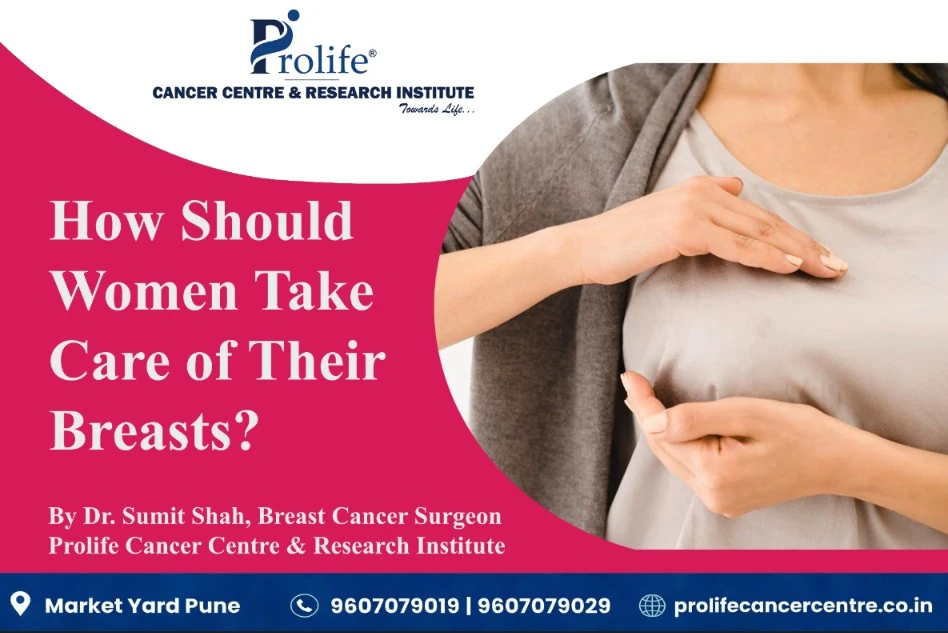
How Should Women Take Care of Their Breasts? | Breast Health Advice in Pune
By Dr. Sumit Shah, Breast Cancer Surgeon
Prolife Cancer Centre & Research Institute, Pune
Good breast care includes knowing your usual breast appearance, noticing new changes, staying physically active, maintaining a healthy weight and discussing screening with your doctor. Everyday hygiene supports skin comfort, while appropriate medical assessment helps identify problems.
Women often put their families and work before their own health. My advice is to make time for yourself without feeling guilty. Breast health deserves attention, but it does not require living in fear.
How common is breast cancer in Indian women?
According to ICMR–National Cancer Registry Programme estimates for 2022, approximately 1 in 29 Indian women may develop breast cancer by age 74. This is a cumulative risk estimate, not the number affected every year. Your individual risk may be different. (pmc.ncbi.nlm.nih.gov)
1. Maintain everyday hygiene and comfort
Keep the skin around and beneath your breasts clean and dry. Change out of sweaty clothing and choose a comfortable, well-fitting bra.
These measures support comfort and skin care; they do not prevent breast cancer. Persistent itching, irritation or a new skin change should be discussed with a doctor.
2. Become familiar with your breasts
Notice how your breasts normally look and feel during everyday activities such as bathing or dressing.
Arrange an examination if you notice a new lump, underarm swelling, skin dimpling, nipple discharge or a nipple turning inward. Breast awareness does not replace mammography or medical evaluation. (cancer.gov, cancer.org)
3. Stay active and maintain a healthy weight
Regular physical activity and maintaining a healthy weight can help reduce breast cancer risk. Excess body weight is particularly relevant after menopause.
Choose activities you can maintain, such as walking, cycling or swimming. If you spend long hours sitting, build movement breaks into your routine. Consistent habits are more useful than short-lived, extreme changes. (cancer.gov)
4. Eat well and avoid alcohol and tobacco
Include vegetables, fruit, pulses and whole grains in your meals. Limit calorie-dense foods and sugary drinks to support weight management.
No single food, herbal remedy or supplement guarantees breast cancer prevention. Alcohol increases breast cancer risk, so avoiding it is a practical protective choice. Avoid tobacco for your overall health. (who.int, who.int, cancer.gov)
5. Discuss breastfeeding and hormone treatment
Breastfeeding can reduce breast cancer risk to some extent. If breastfeeding is not possible, do not blame yourself.
If you are considering hormone treatment for menopause symptoms, discuss its benefits and risks with your doctor. Do not stop prescribed medication without medical advice. (cancer.gov, who.int)
When should women have breast cancer screening?
The timing and frequency of mammography depend on age, personal risk and the screening guidance followed. A strong family history may require earlier assessment or genetic counselling.
Screening aims to detect cancer early; it does not prevent cancer from developing. If symptoms appear, seek assessment rather than waiting for your next screening appointment. (cancer.org, who.int)
Breast health guidance in Pune
If you are looking for a breast cancer surgeon in Pune, Dr. Sumit Shah at Prolife Cancer Centre & Research Institute can provide guidance about breast symptoms, screening and evaluation.
If a diagnosis is confirmed, discuss your options for breast cancer treatment in Pune with your treating team. Begin with accurate information and a plan suited to your needs.
